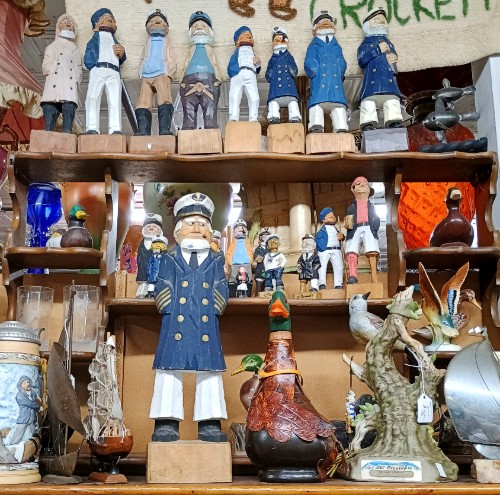
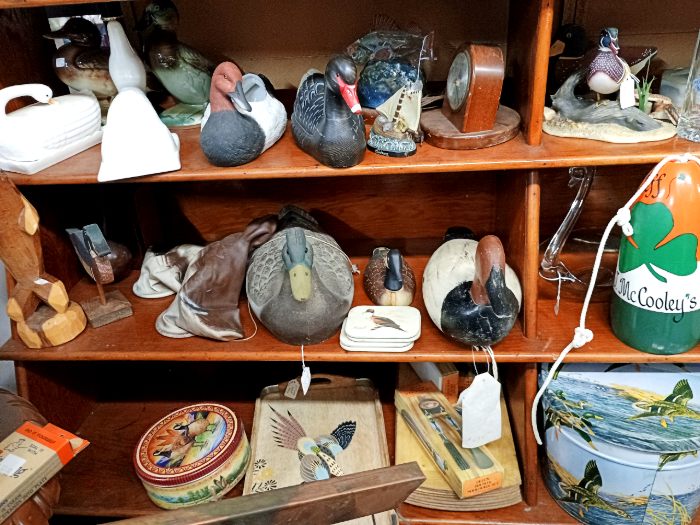
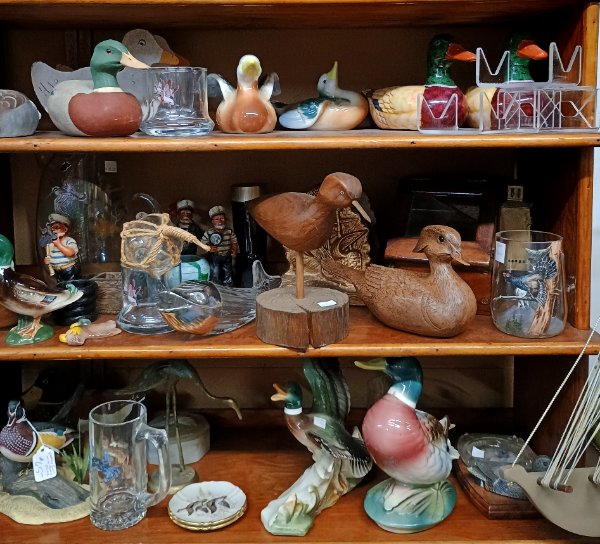
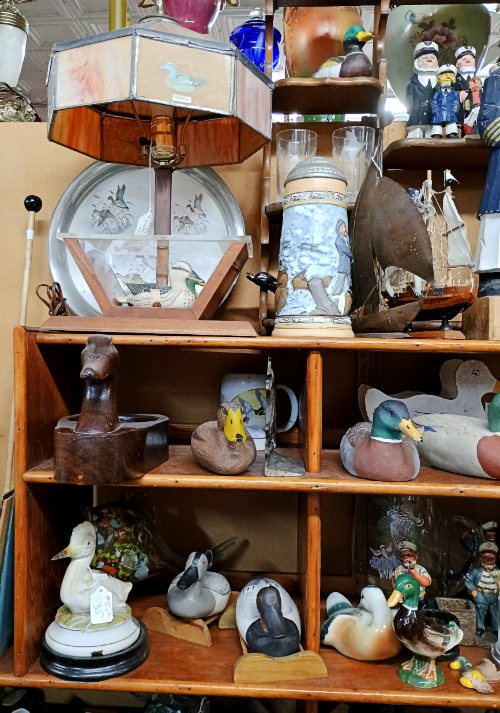
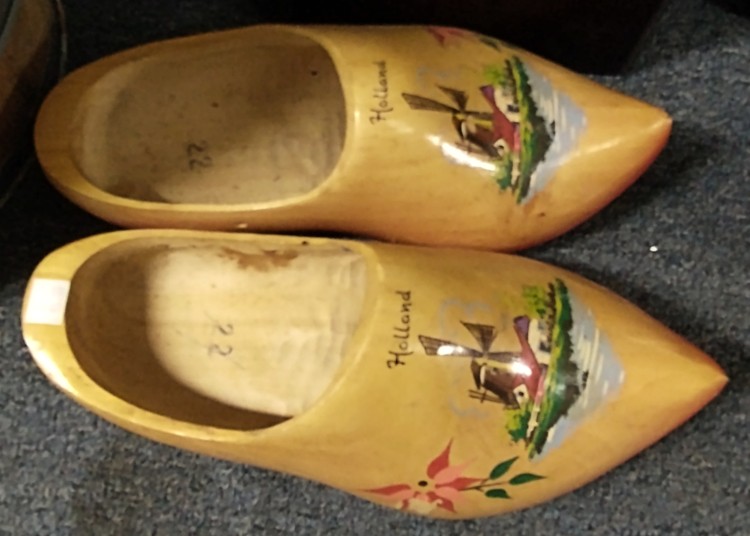
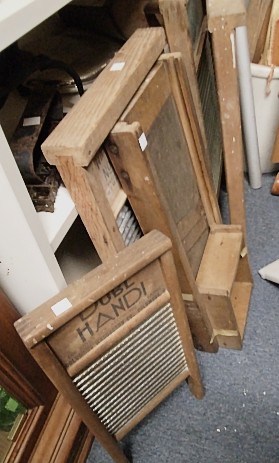
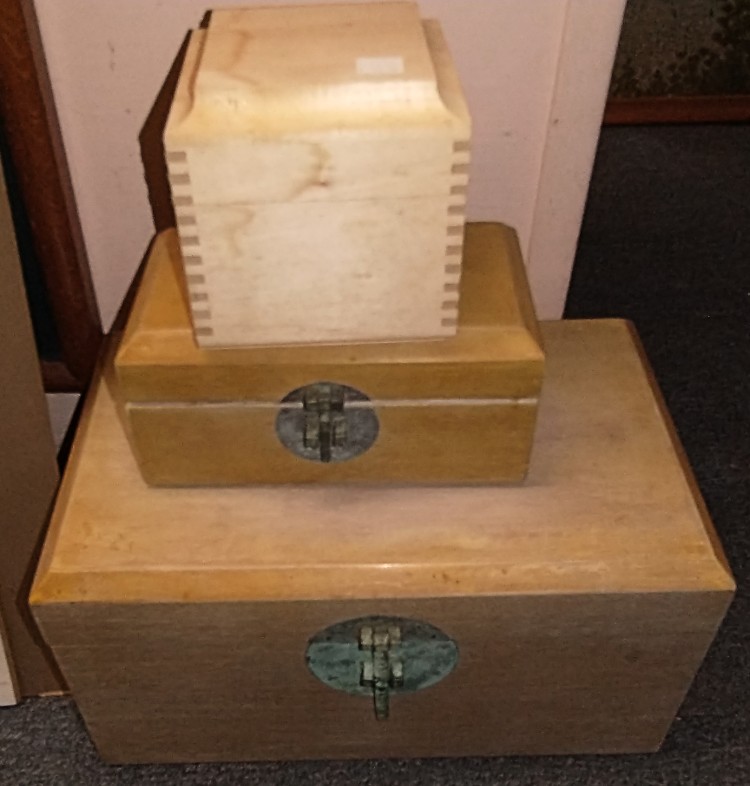
We made it. 2025! It’s time to seize the day and create the life you desire. Does that life include a few vintage collectibles? We most certainly have a HUGE selection waiting for you to visit. Here’s a sampling to start your day!
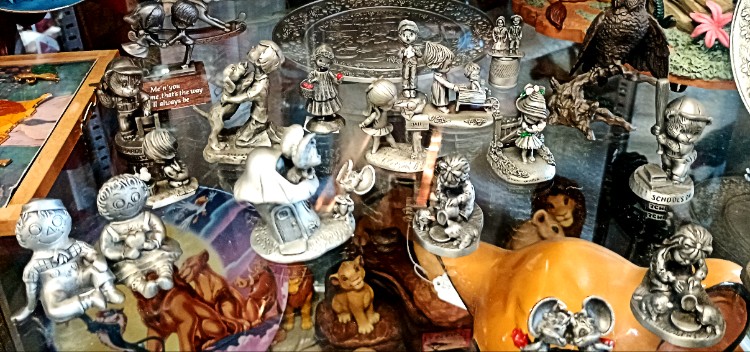
Mini-Pewter Figures
These mini-pewter figures are simply the ‘cutest!’ Stop by and see them in the LION KING case right inside the front door!
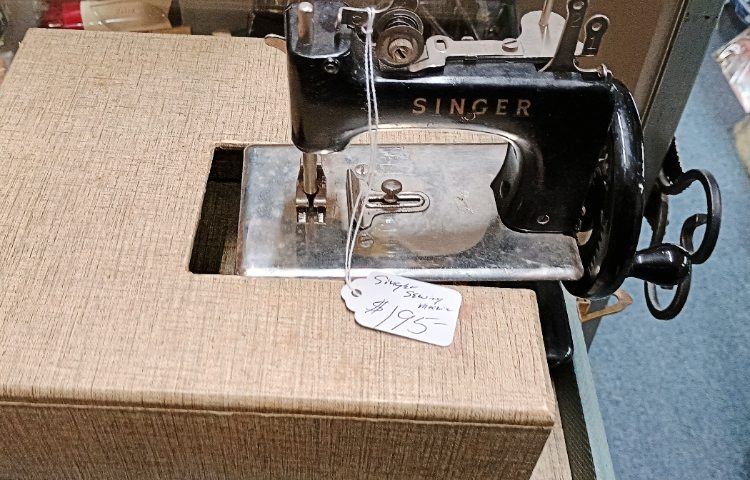
Mini-Singer Sewing Machine
At first, it looks like a child’s machine (which, of course, it could be), but it’s a quality Singer like the big ones.
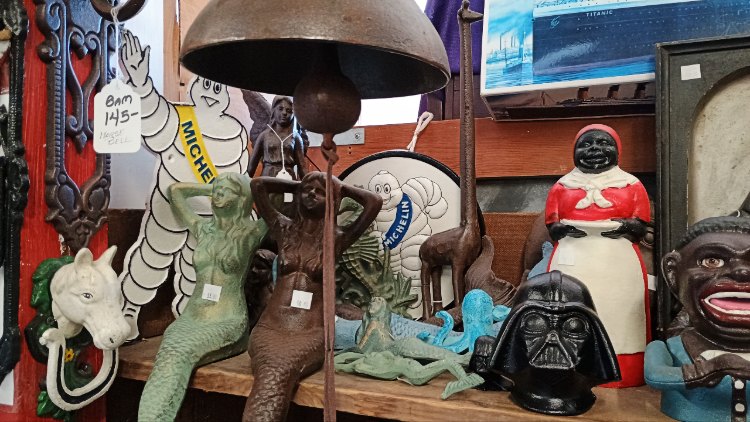
Cast Iron Figures
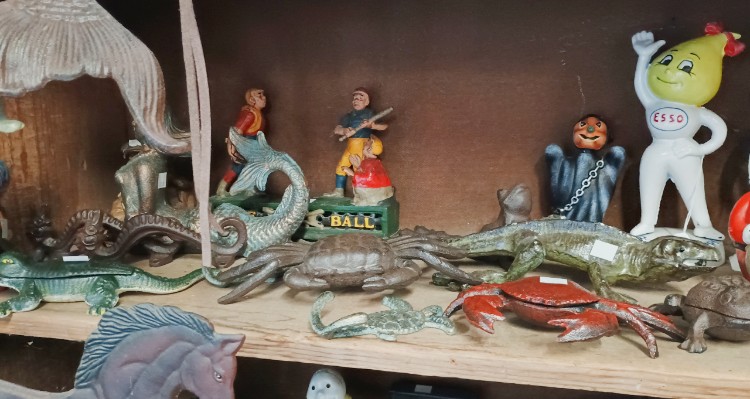
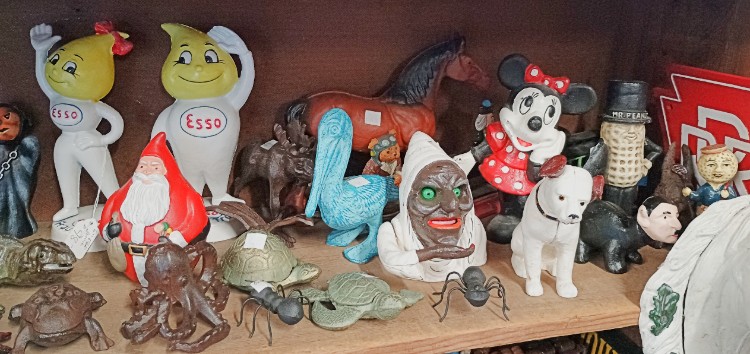
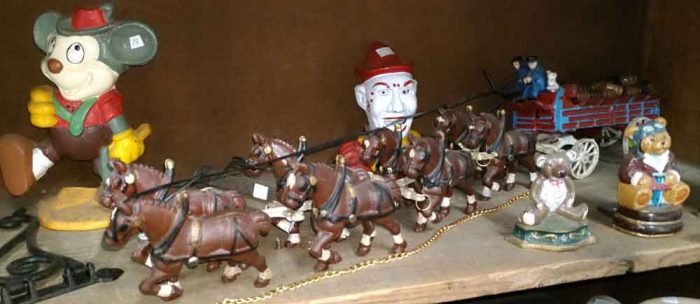
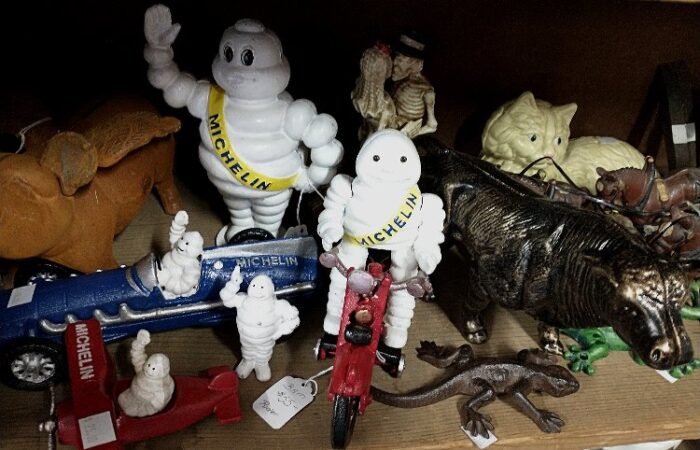
Our cast iron collection is always a big hit. The variety of subject matter is outstanding from ‘critters of all sorts’ to the Michelin Man, mermaids to mechanical banks, and Black Memorabilia to door hangers and more. To your left when you walk in the door, stop in and take a peek.
Vintage Cameras
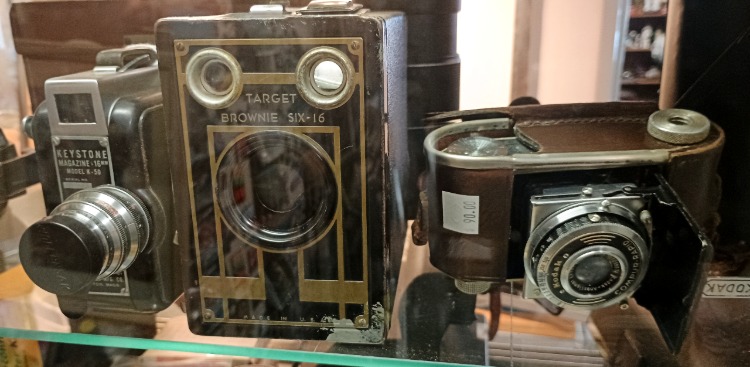
There’s something about working with real film in a vintage camera that creates a unique and satisfying experience among photographers. Stop by and check out the collectible cameras we have available.
Open 10 a.m. to 6 p.m. – 7 days a week – Fridays and Saturdays til 8 p.m. Yep, you know we’re here … and we’re watchin’ for ya! Stop by and say “hello!”
We’ve posted about our cast iron figures many times. To see other posts, VISIT HERE.
Cast Iron Banks
Several of our cast-iron figures are actually banks. Great way to encourage a little saver to collect those coins found on the sidewalk!
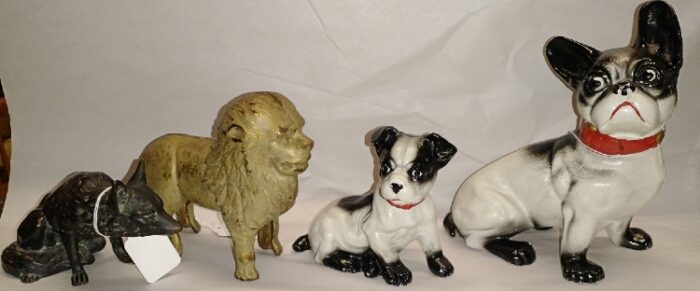
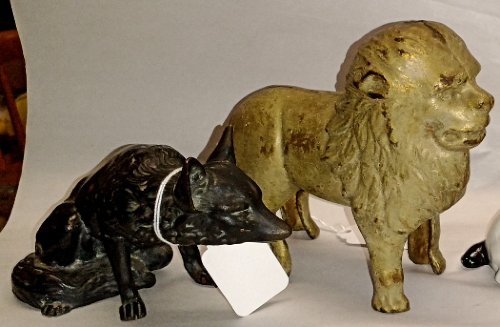
The lion is a cast iron bank. The others are outstanding cast iron paperweights or perfect for a shelf!
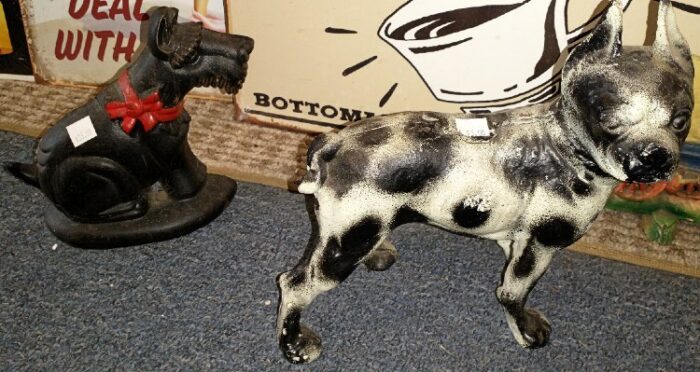
Cast iron dog figures. The one on the right is also a bank.
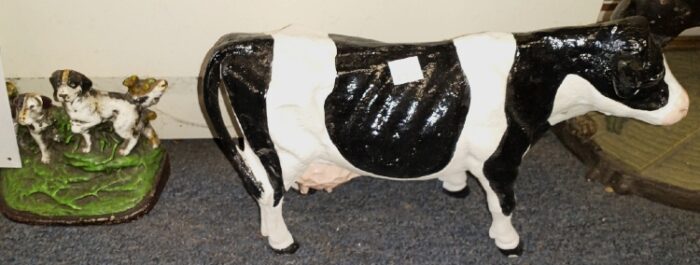
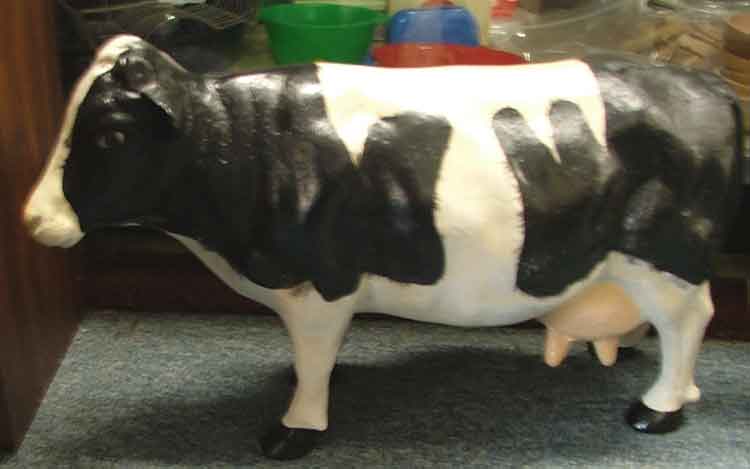
cast iron cow
Closer detail of the fox and the lion cast iron figures
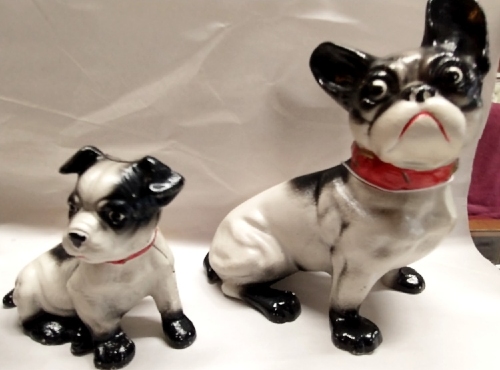
Are these just the cutest cast iron dog figurines!
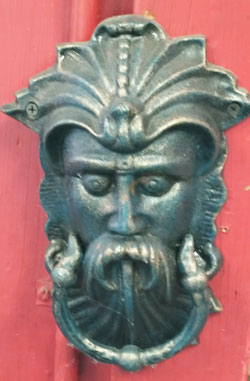
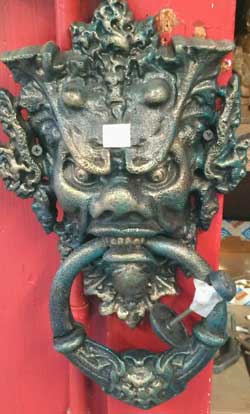
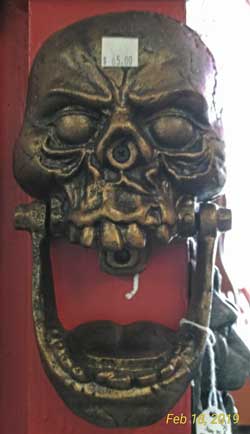
Here, at Bahoukas Antiques, we have a wonderfully diverse collection of cast iron figures that also include mechanical banks and huge door knockers. Some are vintage and very collectible, while others are reproductions. All of them are beautiful! Stop in soon. Yeppir, we’ll be watchin’ for ya!
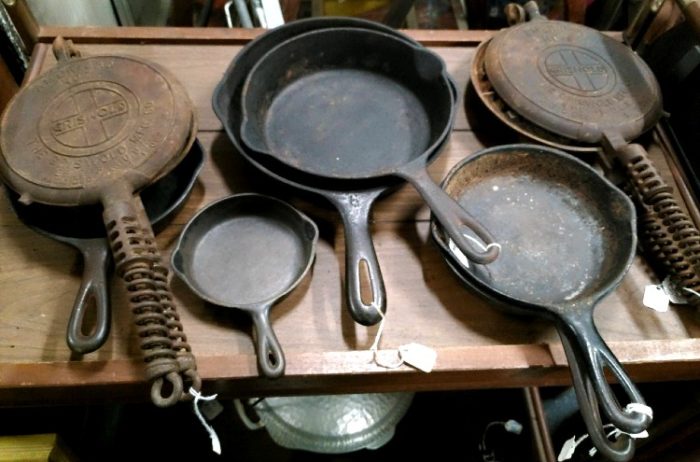
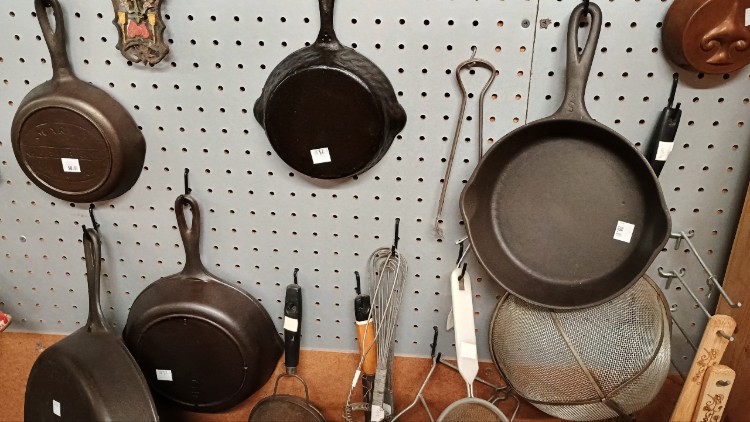
A selection of cast iron skillets and more at Bahoukas
The History of Cast Iron Cookware
The first known use of cast iron cookware was during the Han Dynasty in China, around 220 A.D. Casting techniques became widespread in Europe by the 16th century, and since then, this versatile equipment has been a staple in households all over the world. In 1707, Abraham Darby patented the sand casting method, which is similar to the way we make cast iron today. Because of Darby’s contribution, the 18th and 19th centuries saw a boom in cast iron cookware. Cast iron pots and pans were so important to daily life that in his book, The Wealth of Nations, Adam Smith says they were worth more than gold. Cast iron cookware saw a decline in the 20th century as other cooking materials like aluminum grew in popularity.
Many pieces that seem too difficult to clean-up may be handled with several soakings in vinegar. That and other suggestions are in the following video.
A very informative video re cast iron pans
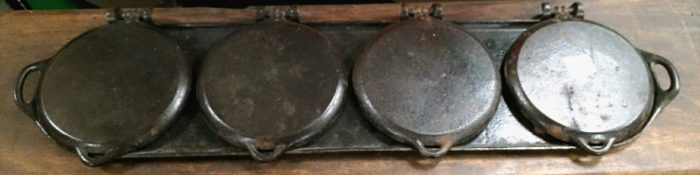
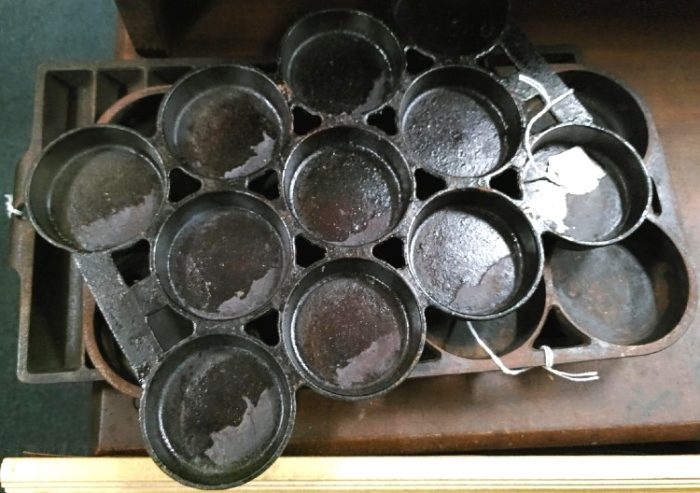
We have several cast iron cooking/baking pieces that will be great in your home, at the hunting lodge, or to use on your campfire!
Cast iron cookware has been around forever, and it isn’t going anywhere anytime soon. If you want to get in on this trend, follow these tips and you’ll be whipping up pan-seared steaks and skillet cornbread in no time.
Mechanical banks were first manufactured in the late 1800s, as the middle class emerged and grew in prosperity during the Industrial Revolution. Hence, the concept of earning and saving money became more and more important, particularly as a value to impart to children. At the same time, Victorian Era tinkerers were experimenting with mechanical technology, including spring-driven and windup devices.
The era also saw a shift in how toys were made. Originally crafted out of wood and cloth, more and more toys were fabricated out of cast-iron and mass-produced in factories, giving their adult creators a chance to express their commentaries on daily life.
At Bahoukas, we have a variety of antique and reproduction cast iron figures and banks. Stop in to see us and add one to your collection. Absolutely, we’ll be watchin’ for ya!
Doors had replaced hangings to provide better safety and privacy, and upper-class Greeks had slaves whose sole purpose was to answer the door.
It’s a bit like having a butler, but one that was chained to the door to prevent them wandering off. If they didn’t die of boredom, they’d fall asleep, and so to wake them up, visitors rapped the door with a short bar of iron attached to a chain.
It wasn’t long before some Greeks realized the short bar made a good weapon with which to attack the householder. So property owners fought back with new technology.
The knocker evolved into a heavy ring fastened to the door by a plate—dual purpose knocker and handle!
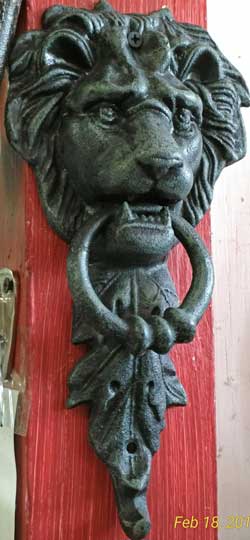
One of the most enduring themes for knockers has been the lion’s head. Traditionally regarded as the king of beasts, the lion’s head symbolizes bravery, nobility, strength, and valor.
Lion’s head knockers were popular in the American colonies up until the revolution when the Eagle took precedence.
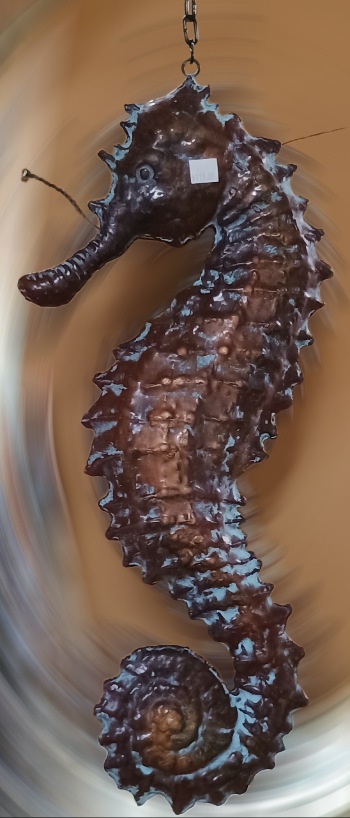
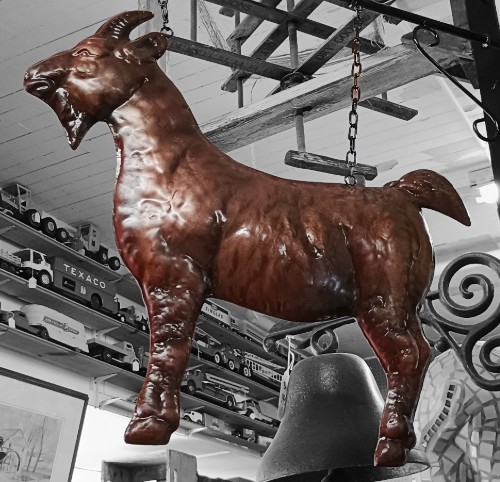
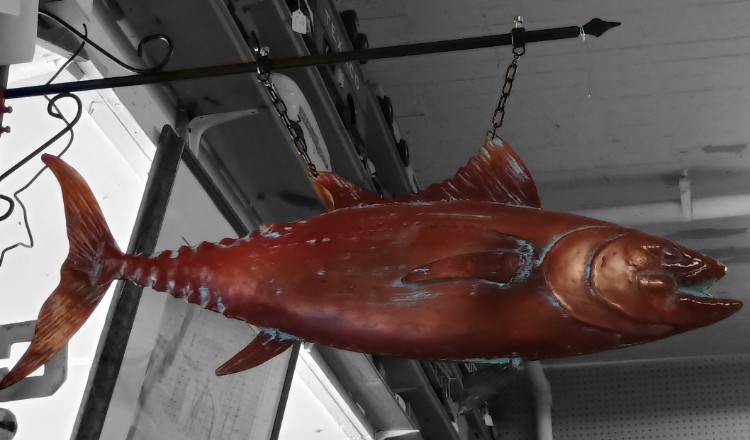
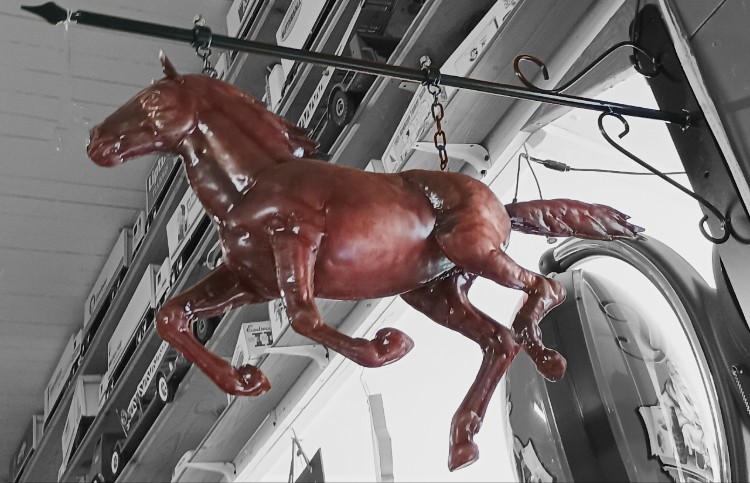
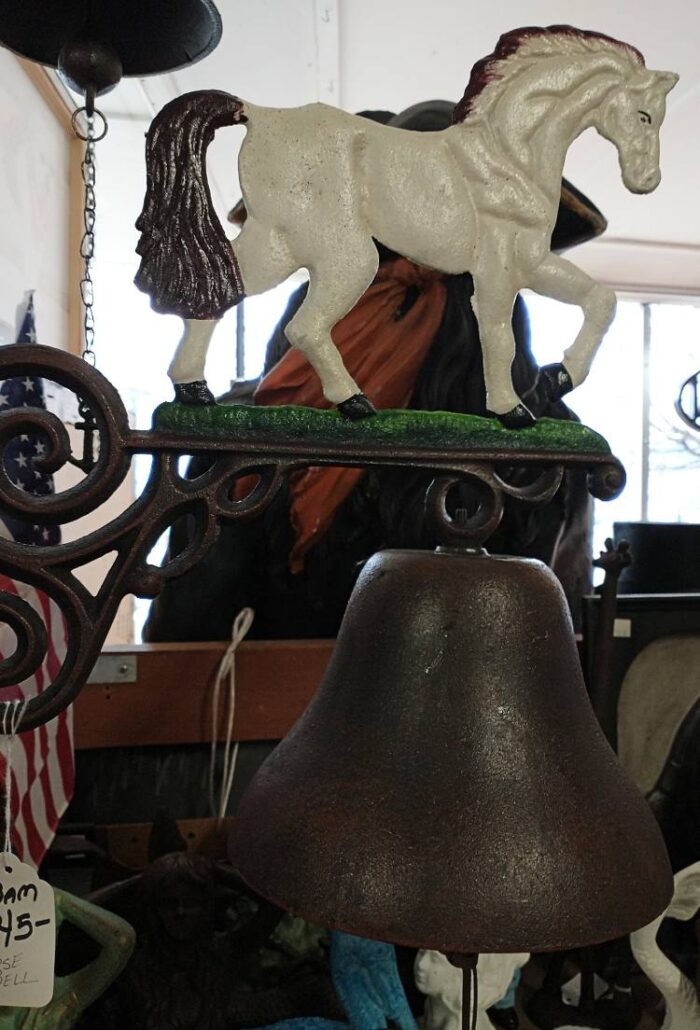
A rainy day is a perfect day to spend some time shopping in Havre de Grace. While you’re here, you might want to check out Bahoukas Antique Mall. Today, we’re highlighting a selection of beautiful copper weathervanes and copper figures that hang from cast iron brackets. Choose from a huge Rooster, 3 Flying Pigs, or a Flying Duck. Plus, we have a Seahorse, a Galloping Horse, a Fish, and a Goat that hang from cast-iron brackets. These are stunning pieces.
These pieces are beautiful. Please stop in and see them.
Do you know how to read a weathervane?
Check out this video.
The weathervane has been with us for … oh, 2000 years. Here’s a brief history of why the Rooster was so popular a long time ago.
To understand how the rooster took over as the favorite weathervane topper, it is important to tell the story of St. Peter after the Last Supper. In the biblical passages describing these events, it was said that Peter would deny Jesus three times “before the rooster crowed.” Because of this, the rooster became known to Christians as the symbol of St. Peter.
Sometime between 590 and 604 A.D., Pope Gregory I, took this a step farther, declaring that the rooster, emblem of St. Peter, was the most suitable symbol for Christianity. It is thought that this declaration led to the first roosters appearing on top of weathervanes.
The Rooster Becomes Law In the 9th century, Pope Nicholas made the rooster official. His decree was that all churches must display the rooster on their steeples or domes as a symbol of Peter’s betrayal of Jesus. In accordance with the decree, churches started using weathervanes with the rooster.
As centuries went by, the rule about placing roosters atop churches went by the wayside, but roosters stayed on weathervanes. European settlers brought weathervanes wherever they traveled, including to the New World. Nowadays, you’ll find weathervanes — mostly with roosters, but sometimes with other symbols — topping buildings throughout the United States, Europe and elsewhere.
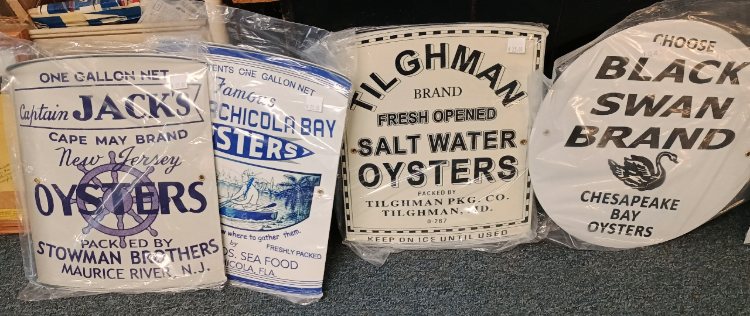
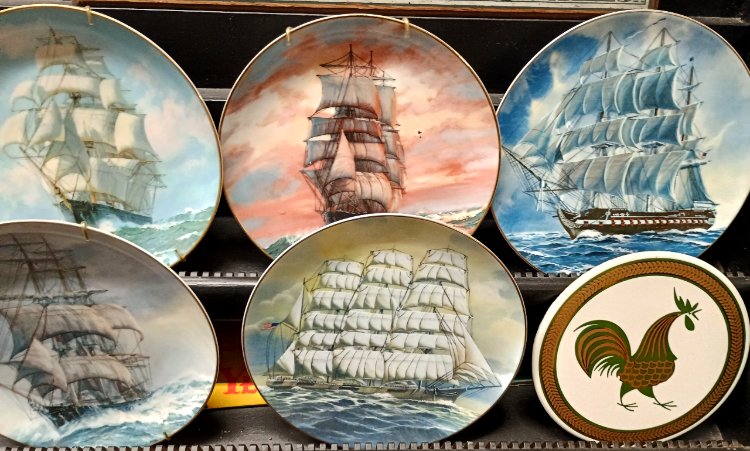
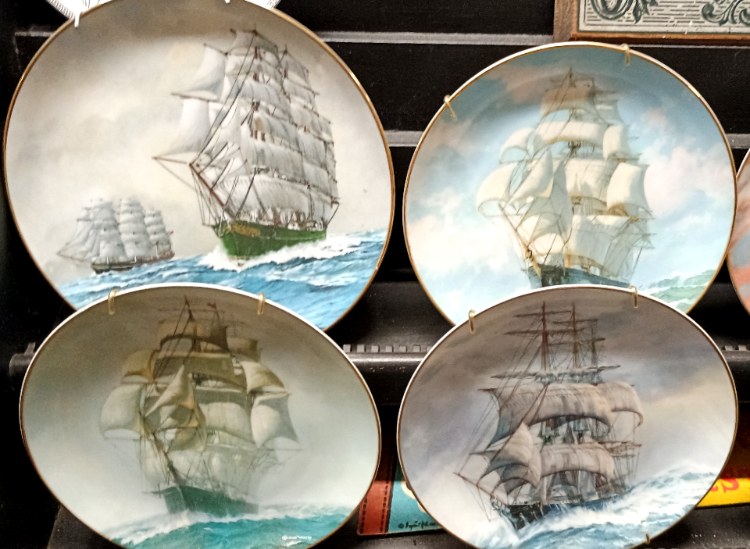
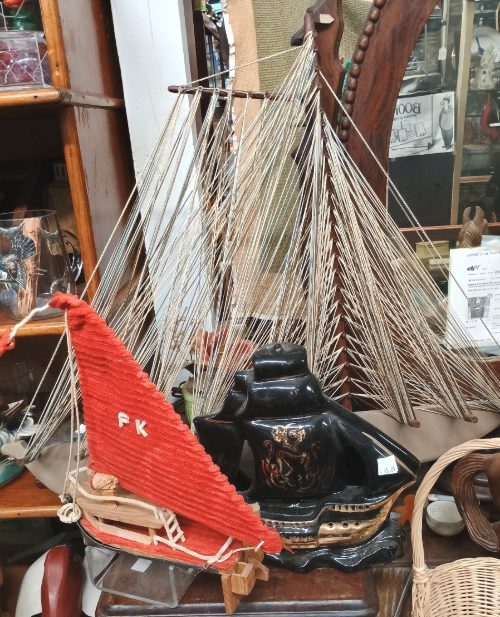
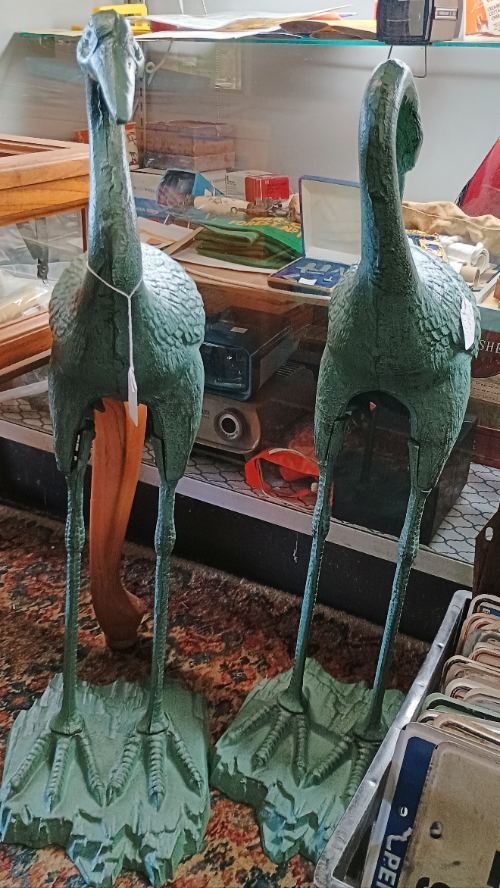
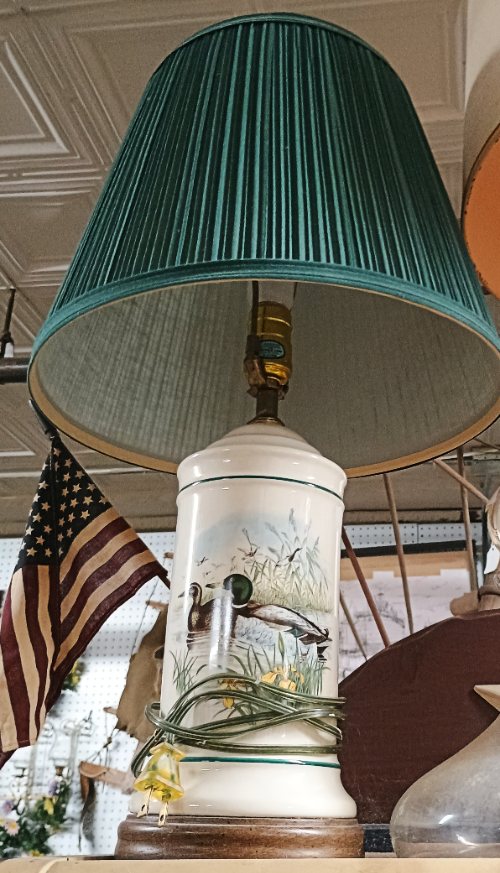
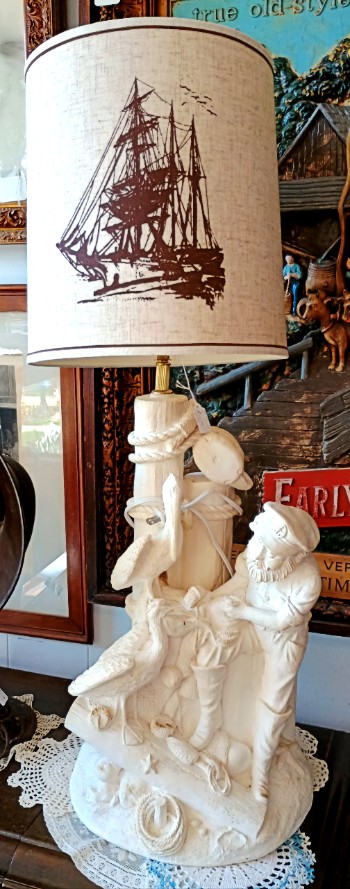
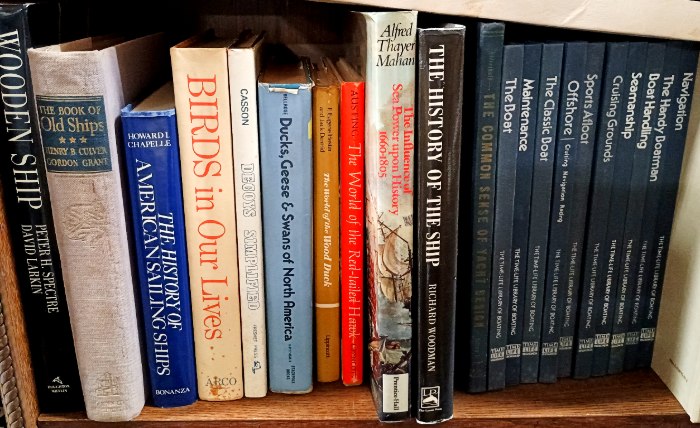
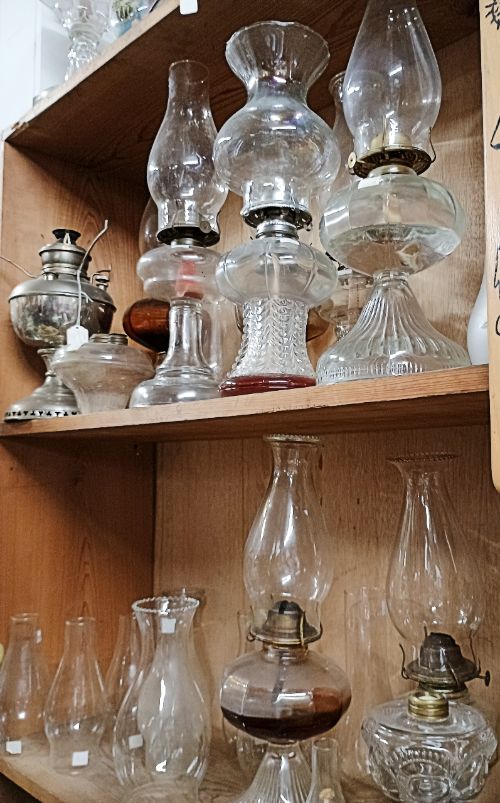
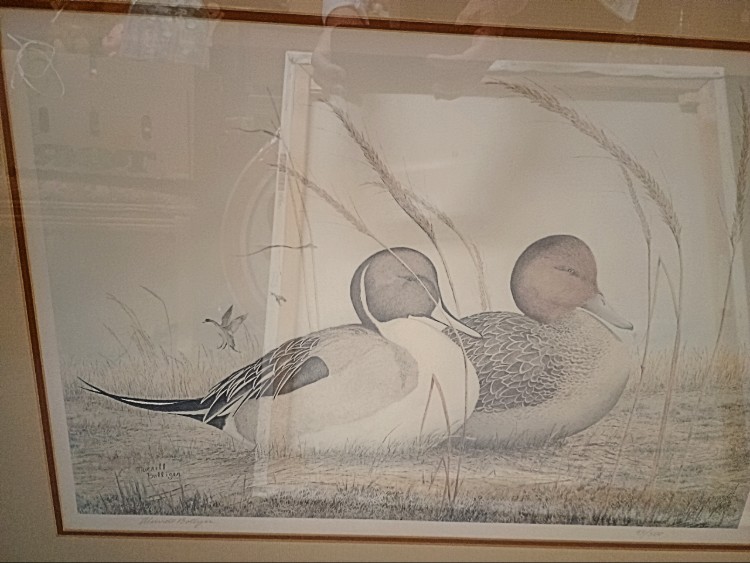
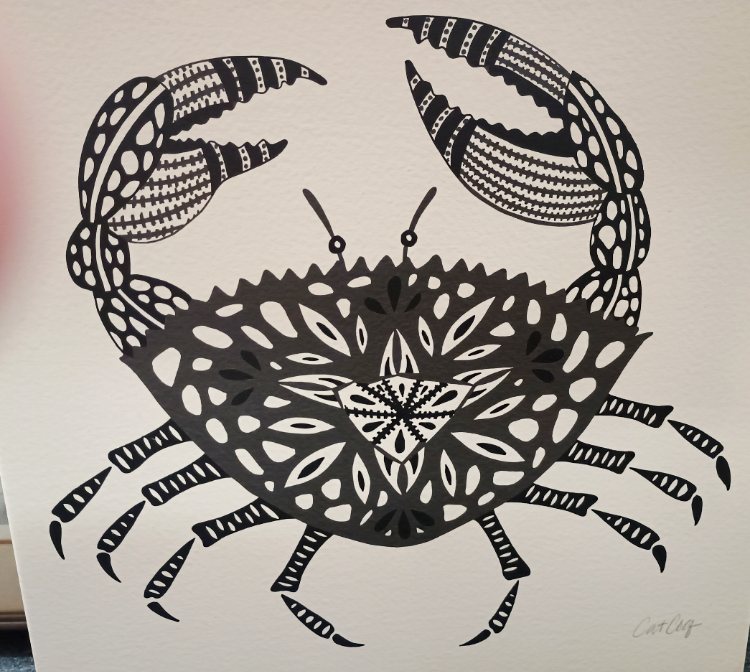
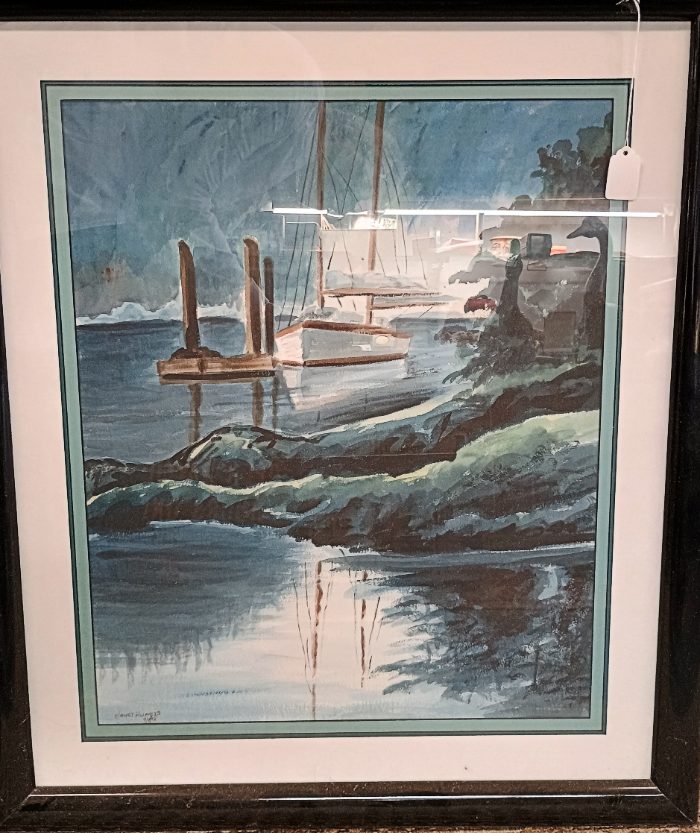
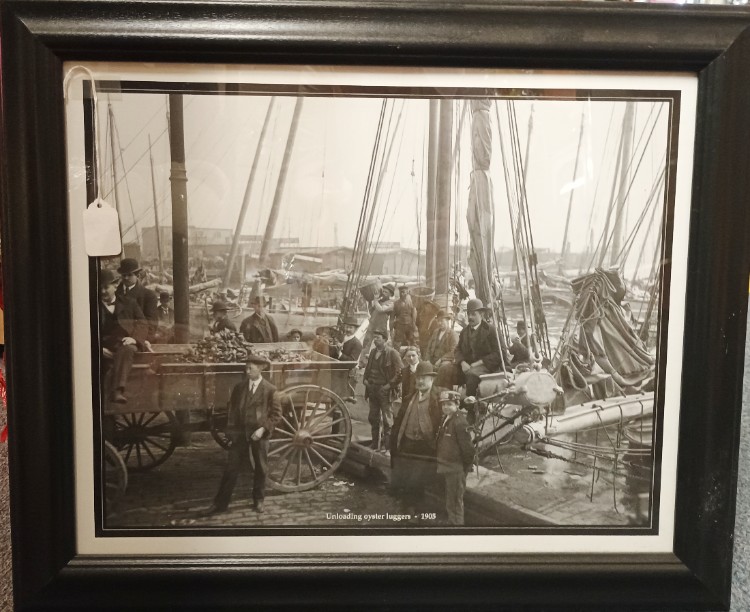
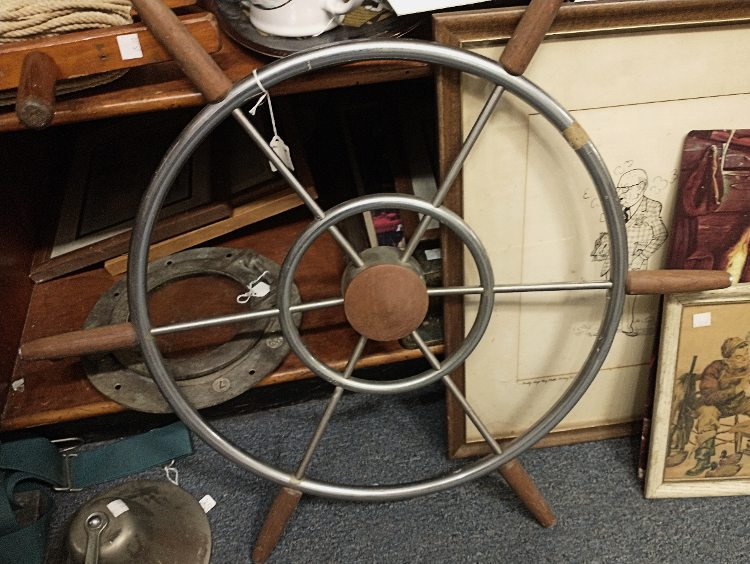
Here at Bahoukas Antique Mall, we have a delightful selection of nautical decor to decorate your shoreside cottage, condo, or home! From copies of old oyster tins to beautiful cast iron herons, nautical books to unique art, and even several beautiful lamps, we have it all! Check out the gallery for just a few ideas:
There’s lots more to discover and you’ll need to look UP and DOWN to see it all. We have some fine, unique, nautical decor items to add a bit of charm to your cottage.
Stop in today and find your treasures! You know we’re here … and we’re watchin’ for ya!
This beautifully painted rooster sits atop a large dinner bell that needs to be mounted to a wall. It’s an absolutely gorgeous piece.
Cast-Iron Figures for every decor!
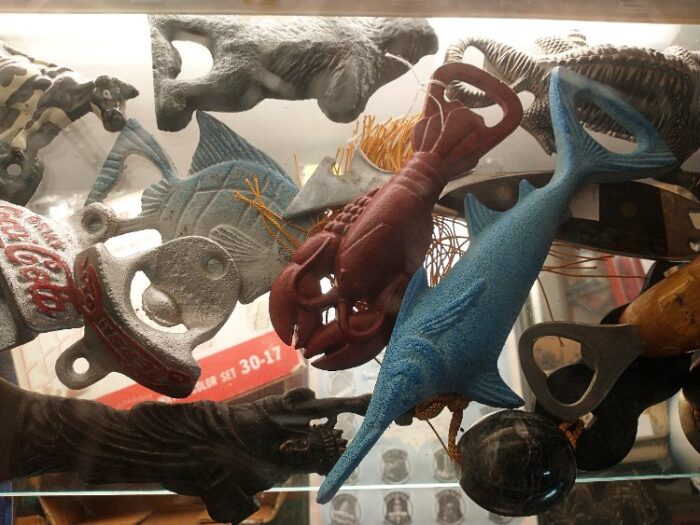
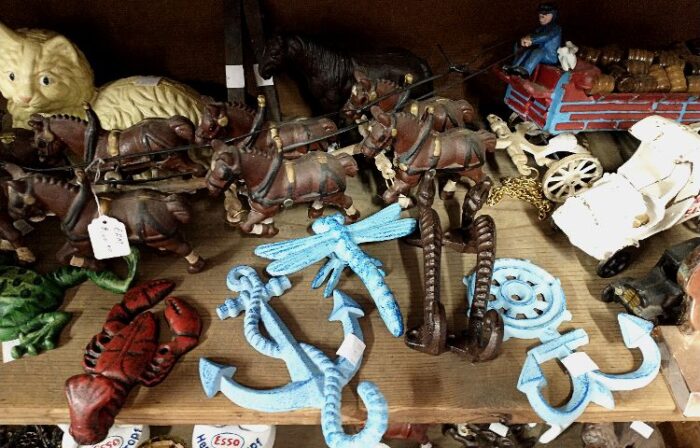
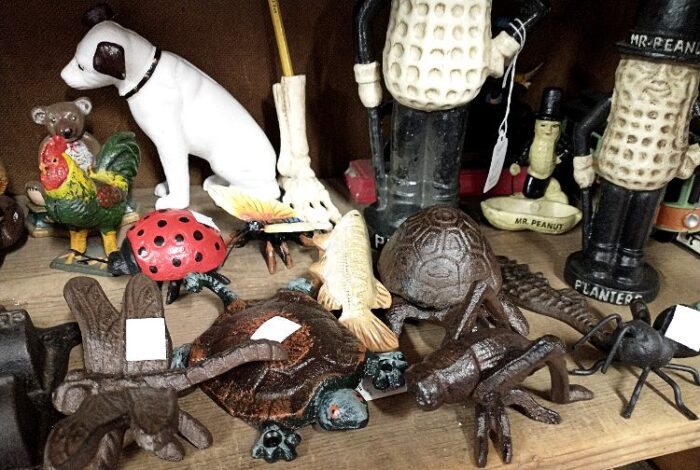
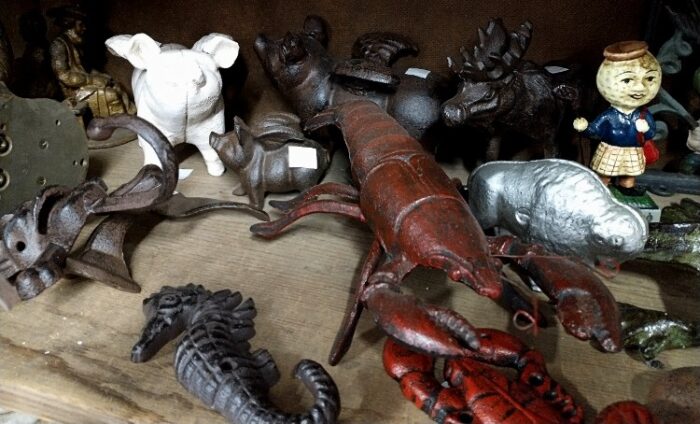
We have an eclectic assortment of cast-iron figures (old and new), bottle openers, door knockers, and cast-iron mechanical banks.
These are just a few samplings. From lobsters to ladybugs, mermaids to Michelin men, flying pigs to turtles, well, you’ll just have to come and see for yourself. We’re sure you’ll find the perfect addition to your collection or for your decorating idea. Yep, we’ll be watchin’ for ya!
These cast iron kettles are a size 4 and 8. The larger is a Jos Bell & Co.
Heat On? Fireplaces Working?
It’s the season where we begin to crank up the heat. Along with the warm and cozy fireplaces and pellet stoves or even just the welcome heat from your furnace, dry air starts to affect our comfort. Many folks love to put a kettle of water on the stove and let it add a bit of humidity to create a more comfortable – and healthy – home!
These two kettles are definitely up to the task. Come see them for yourself. We also have a number of other cast iron items waiting for you to consider.
Might You Be A Hunter?
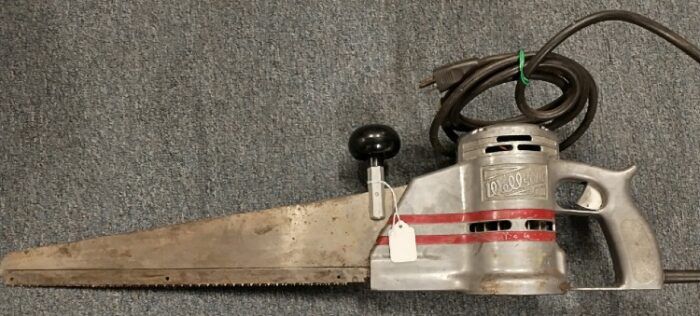
Electric Wellsaw model 400 for cutting meat – from the 1950s
Along with cooler temps, it’s also hunting season. This 1950 Wellsaw model 400 electric saw is for cutting meat. It does work.
You know, here at Bahoukas Antique Mall and Beer MuZeum, you just never know what our ‘collector of collections’ might have in the shop. So hurry in and enjoy a look back while considering how you might use these very collections to make your life forward a bit easier or more fun.
Yep, we’re here – ready to help you find the most unique of holiday gifts. And we’re watchin’ for ya!
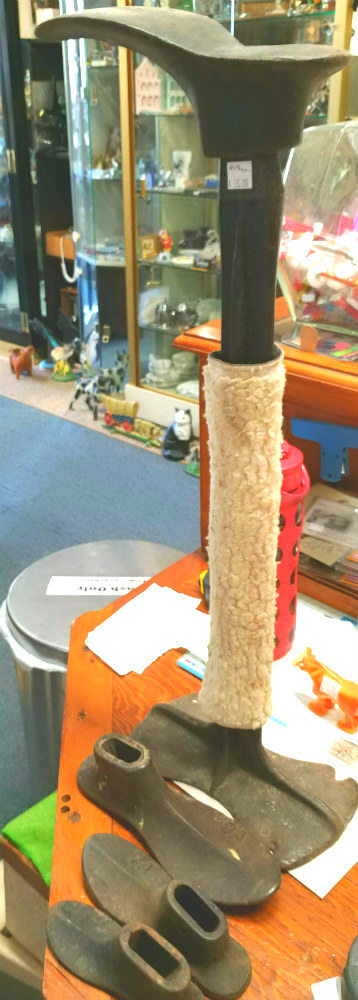
This set of cobbler’s shoe repair stands would make a very interesting display in the right setting.
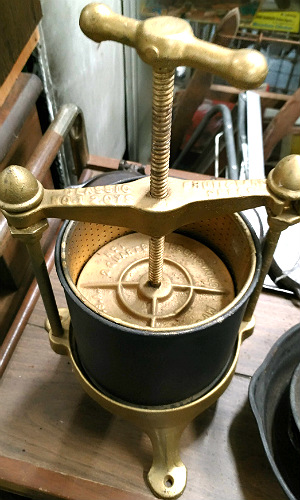
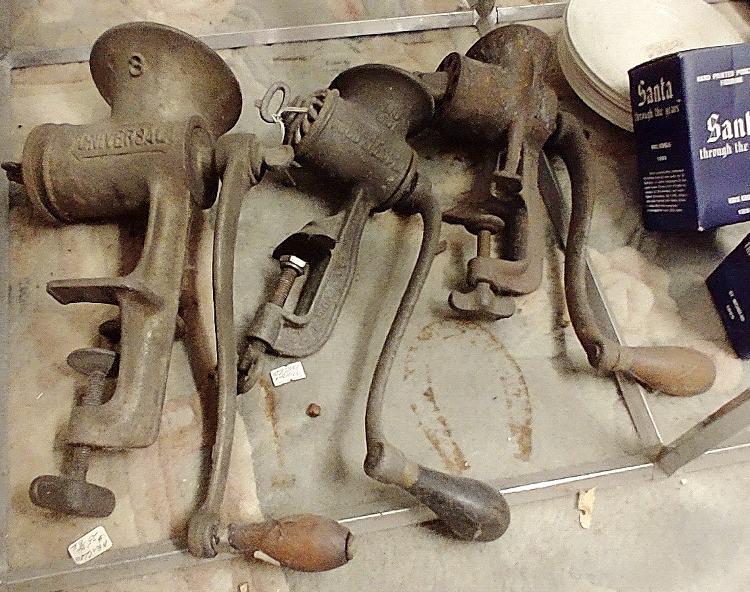
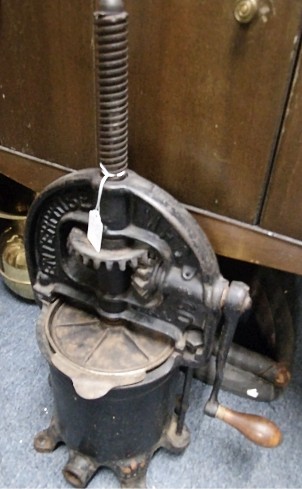
Sausage Press/Juice Press
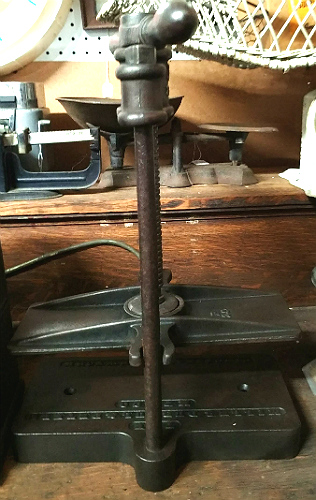
This press has been painted, but it’s really beautiful!
This press isn’t exactly the one we have, but you get the idea. It’s also been powder-coated for durability and looks amazing!
A unique cigar press
A small cast iron cigar press.
How’s it Done? Creating cigars, as you may know, is a process that takes months and even years. After our sweet tobacco leaves are primed from the fields, they are sorted, cured, fermented, sorted again, and bunched. It is here that we differ from the regular cigar and get into box-press. Once ‘bunched’, the filler is rolled in its binder; a standard cigar will be pressed into shape in a mold and this will be its final shape. The molds are stacked sometimes 25 high for an allotted time. The stacking allows for pressure to be distributed evenly. From here the cigar is trimmed and paired with its wrapper. Where box-pressing differs is the compression methods used to make the iconic square shape. Box-pressing is only ever done on a stronger leaf; a broadleaf wrapper is far too delicate to withstand the pressing process.
Standard Box-Pressing This method is very similar to pressing your regular cigar. Once the screaming newborn stogie has its wrapper, it’s snugly placed in its box, while multiple boxes are stacked and placed on a manually controlled press with just enough pressure to form a tight seal and avoid breakage.
So as you see, here at Bahoukas Antique Mall, you just never know what you’ll find. Stop by soon and see these unique vintage tools for yourself. Great collectibles, unique items, and definitely conversation starters! Yep, we’ll be watchin’ for ya!
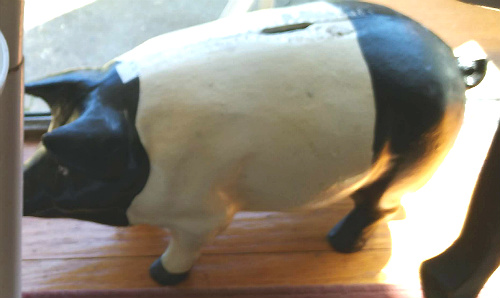
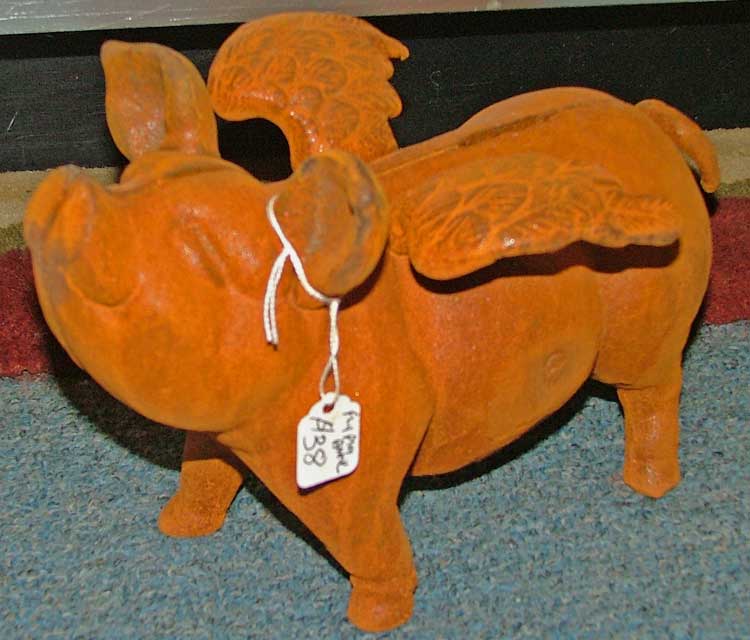
We have some wonderful critters to decorate your home or even your office! This piggy bank is cast iron and probably at least a foot long. What a great way to keep that door open and let the cool breeze in while having a great place to put all that loose change!
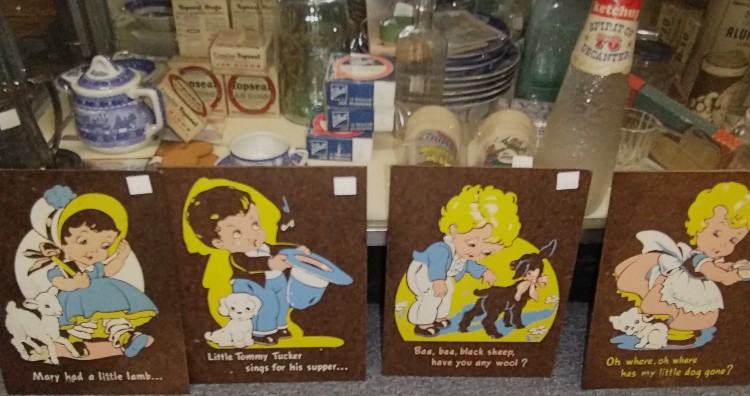
Mary had a little lamb… and so did Bahoukas!
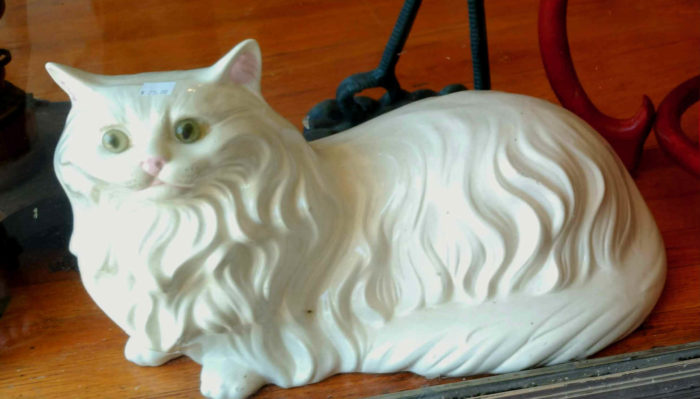
Lifesize kitty cat … don’t you just love it!
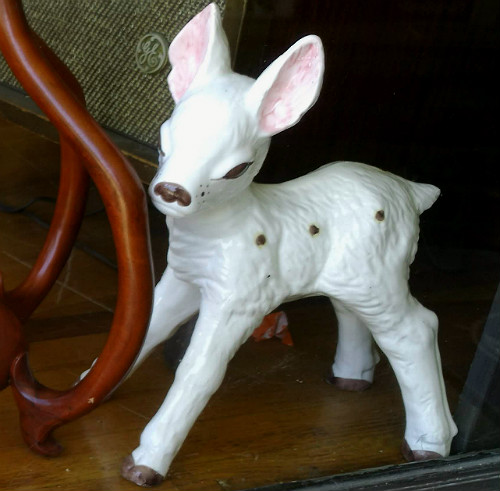
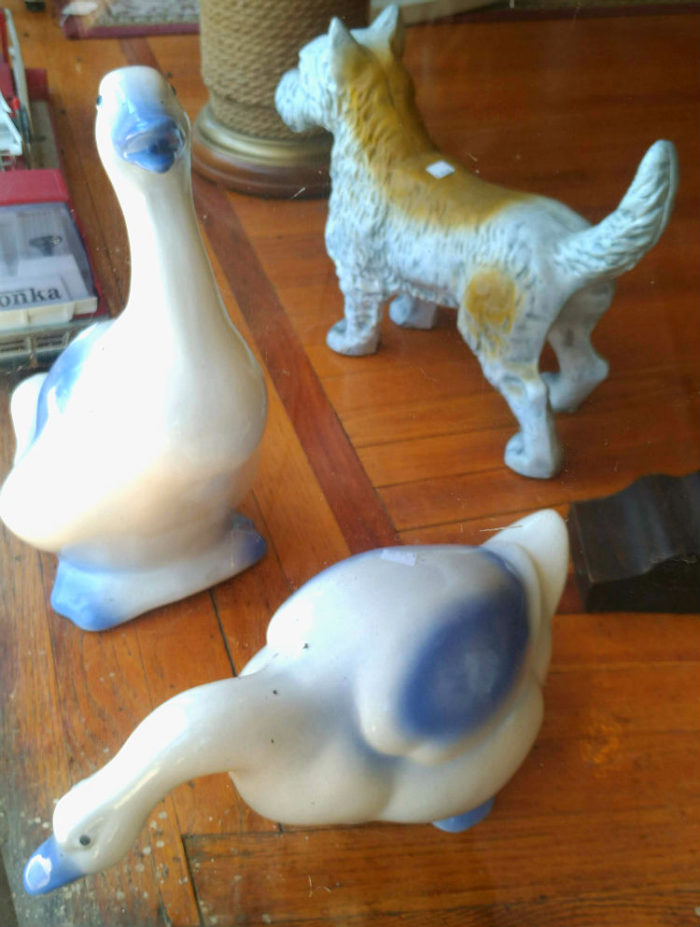
The lamb, geese, and cat are ceramic. But oh, so cute! Surely there’s a special little space that one or two would work perfectly!
The dog is cast iron. We have a wide variety of cast iron pieces for shelf or floor, as well as some doorstoppers.
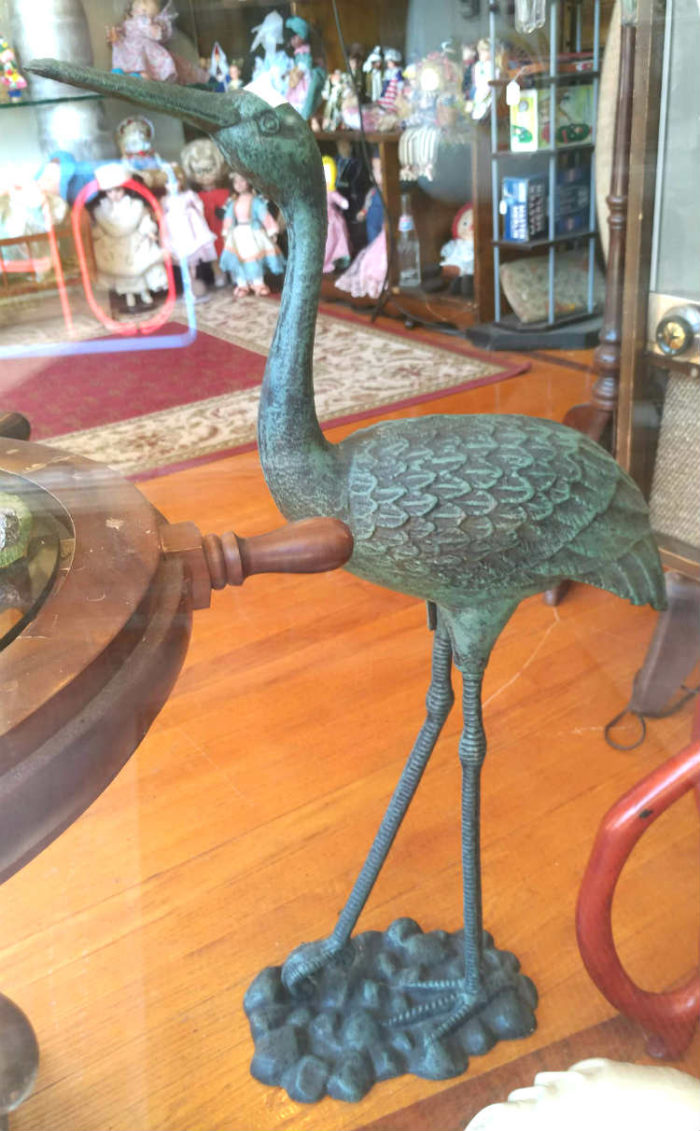
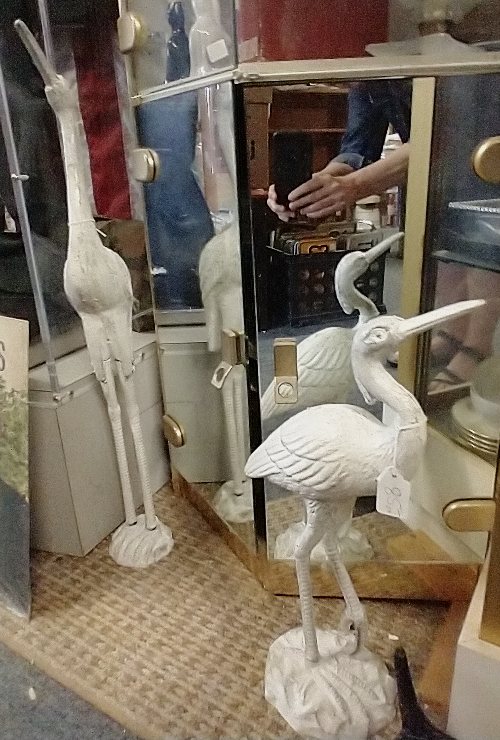
The cast iron heron is perfecting for our area. But, then again, anyone who loves herons will find the perfect spot for it. Have a water view from your home? This would be a wonderful addition to your decor. Wish you had a water view? This wonderful statue could help remind you of the joy you feel when you’re near the water.
Just a sampling of the fun items you’ll find at Bahoukas Antique Mall & Beer MuZeum in Havre de Grace, MD. Stop in and discover a perfect collectible from the ‘Collector of Collections.’ Yep, we’ll be watchin’ for ya!
You’ve heard that, right? It’s called an adynation!
The phrase “when pigs fly” (alternatively, “pigs might fly”) is an adynaton—a figure of speech so hyperbolic that it describes an impossibility. The implication of such a phrase is that the circumstances in question (the adynaton, and the circumstances to which the adynaton is being applied) will never occur. from Wikipedia
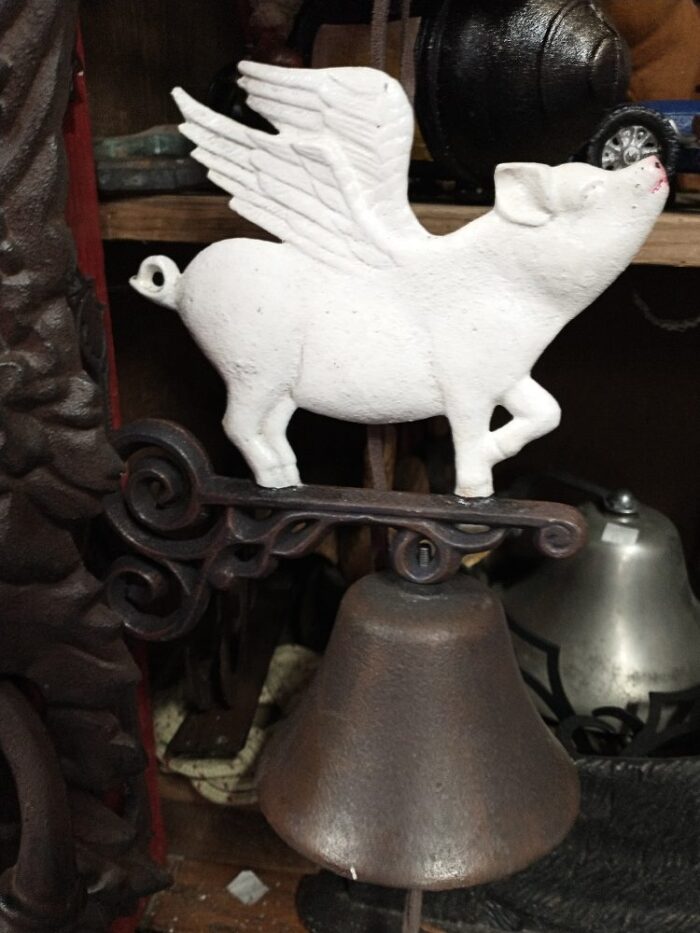
We have a fairly large variety of vintage and reproduction cast iron pieces, including our “FLYING PIG!”
Use these hefty fellows as a doorstop, by your fireplace, or just a fun decoration and conversation piece. Here are a couple more pics:
Along with these great reproduction cast iron pieces, you’ll find a number of vintage and collectible cast iron items.
It couldn’t be any more fun than this! So drop by Bahoukas Antique Mall and choose your favorite from our vintage and reproduction collections of cast iron figures. Yessiree, we’ll be watchin’ for ya!
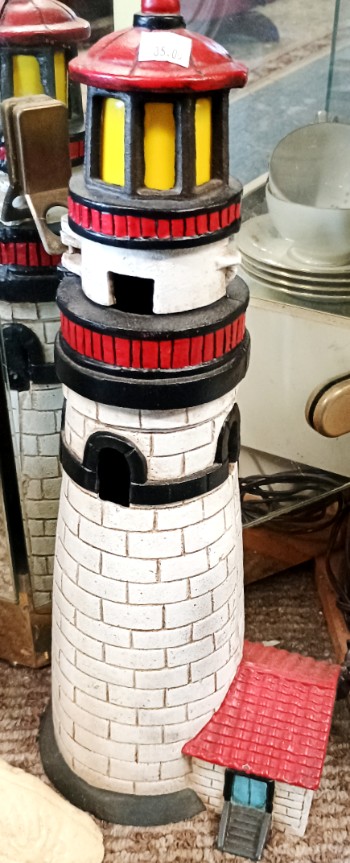
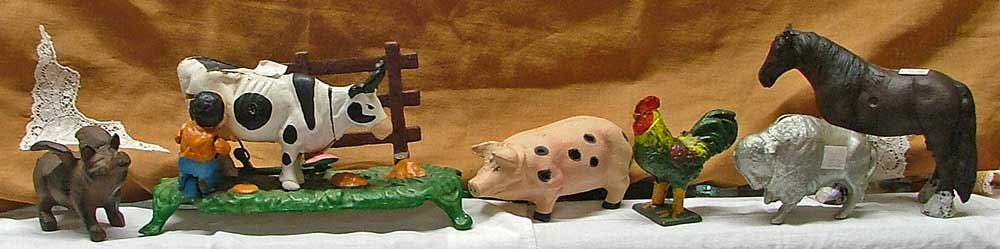
Cast iron farm animals may be truly vintage and collectible – or reproductions. Above is a ‘flying pig’, a boy milking a cow, a pig, rooster, buffalo and a horse. We have many other collectible/vintage/and reproduction cast iron pieces from beautiful mermaids to Black Americana pieces, huge lighthouse doorstop to mechanical banks.
So for the collector on your gift list, or a unique gift for the farm-loving child, we have some very intriguing cast iron figures. Stop by Bahoukas Antique Mall to browse our 9,000 sq ft overflowing with unique ideas for gift giving! We’ll be watchin’ for ya!
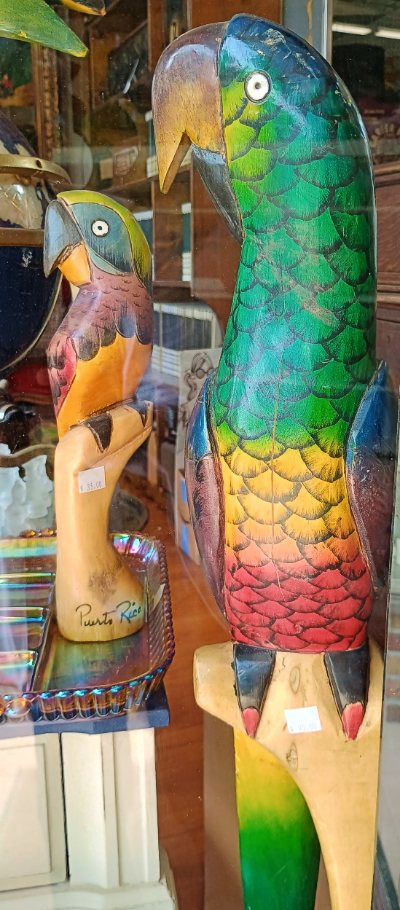
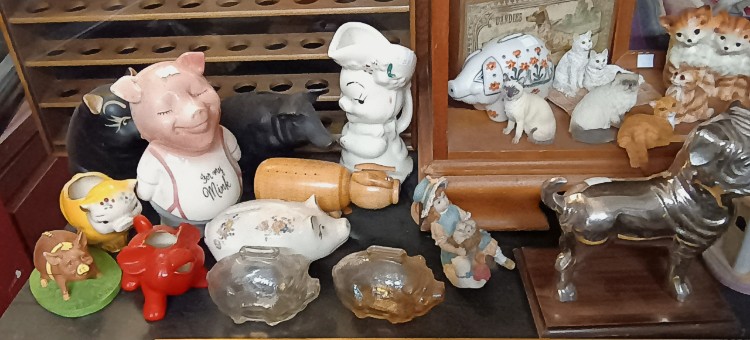
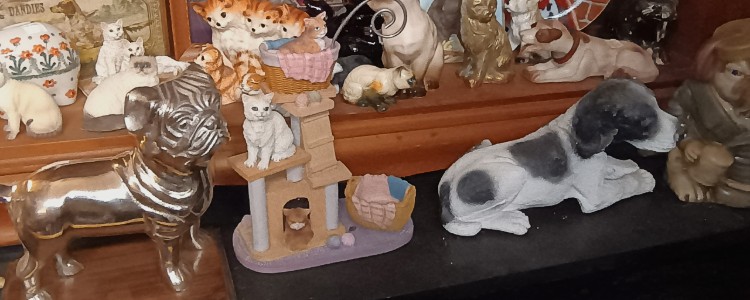
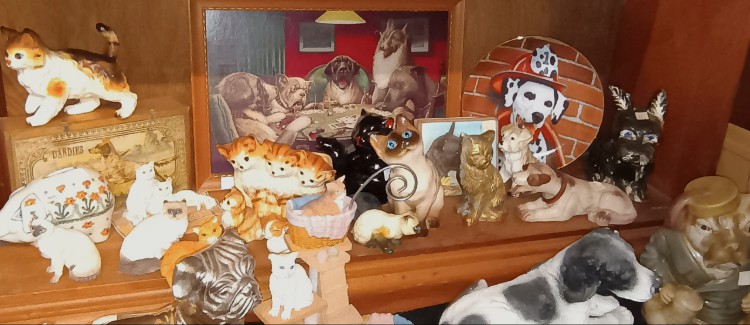
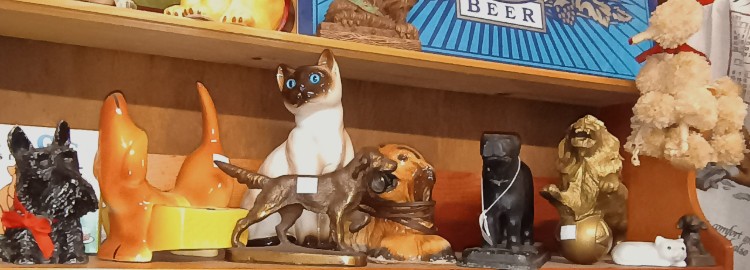
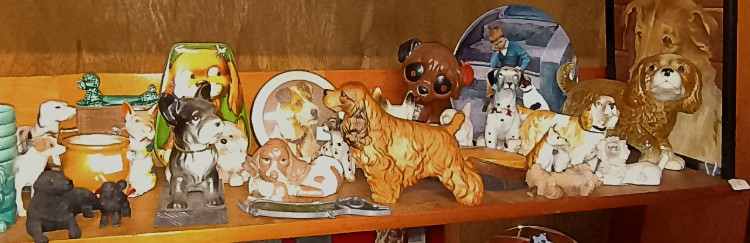
Today, we highlight the many ‘critters’ you’ll find throughout the store. They include kitties, dogs, and even piggies. Some are ceramic, others plastic, cast iron, and even wood carvings.
These photos are just a sampling. Stop in soon.
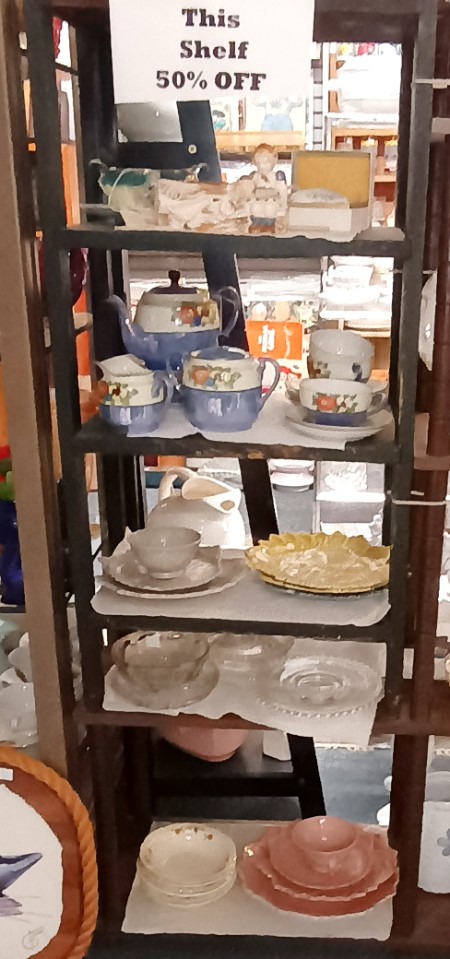
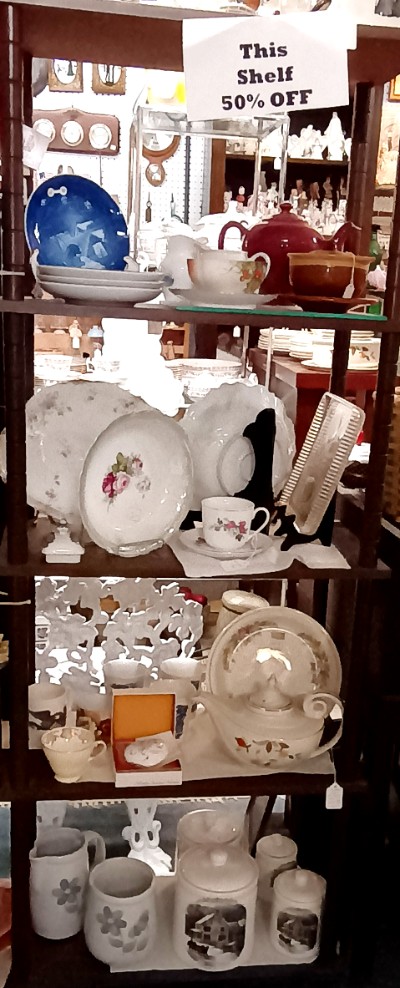
Special 50% off Shelves
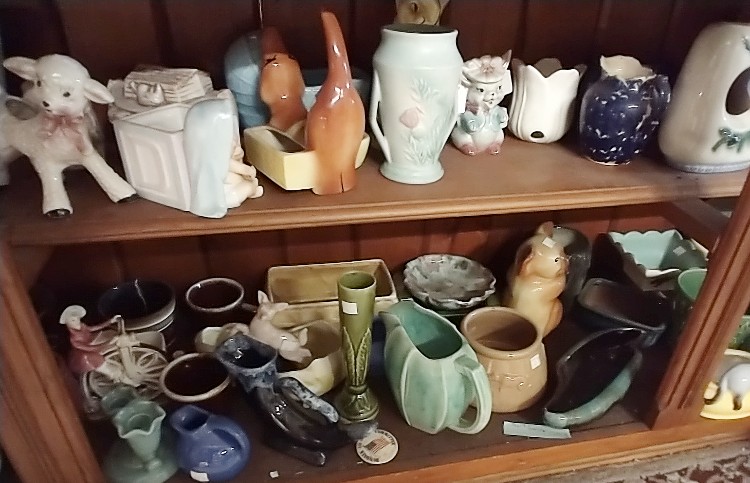
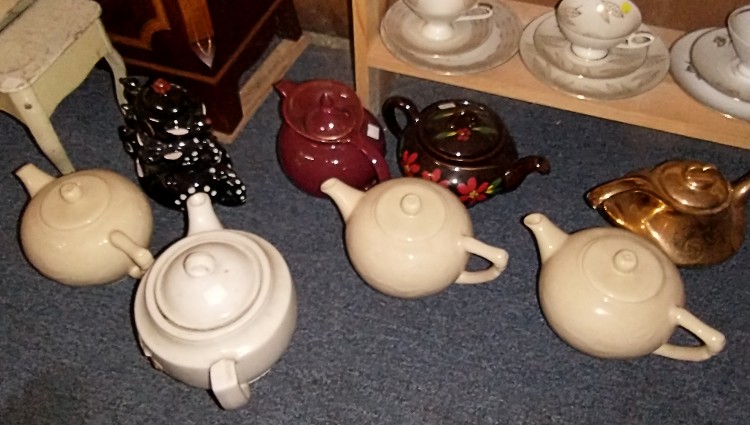
You’ll definitely want to peek at the shelves that offer 50% off. You just never know what you might find! Teapots, dishware, pitchers, and more are available for 50% off!
Bundle up and get yourself to our shop. There are treasures to be found. And yessiree, we’re here and we’re watchin’ for ya!
We work hard to find perfect items to add to our “Collection of Collections.” So that you might find the special treasure for yourself or to gift. Do come and browse!
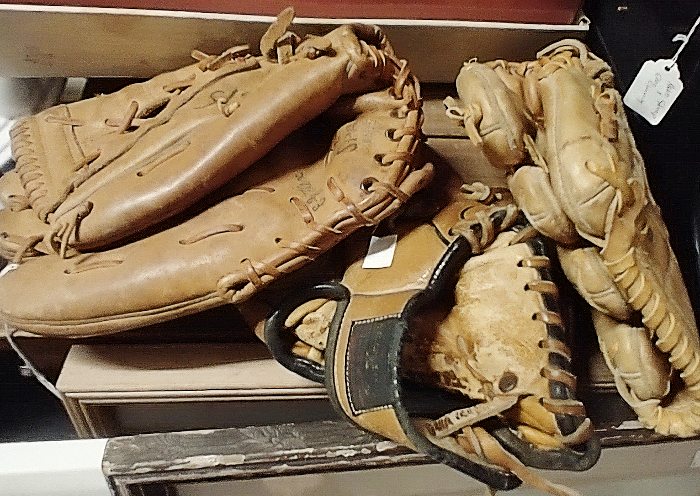
For the Sports Collector
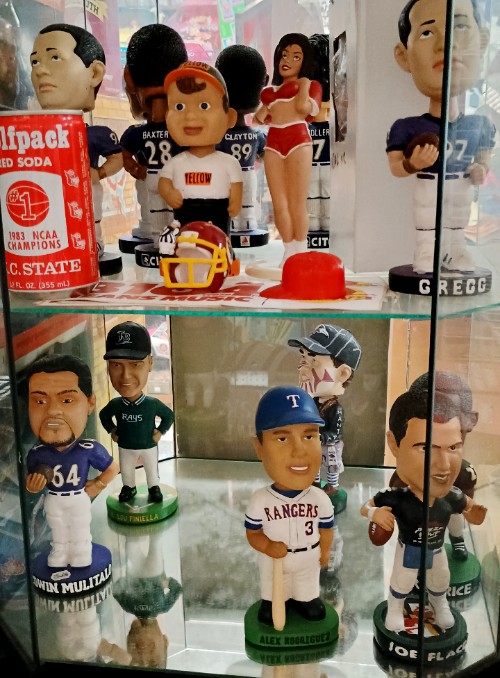
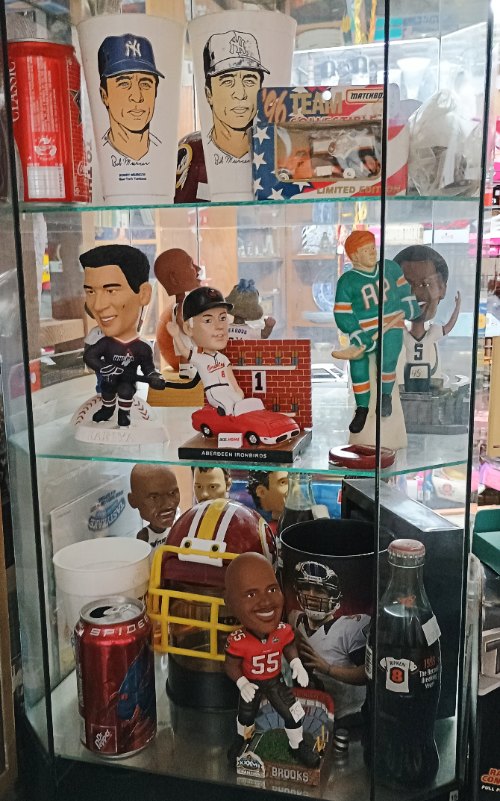
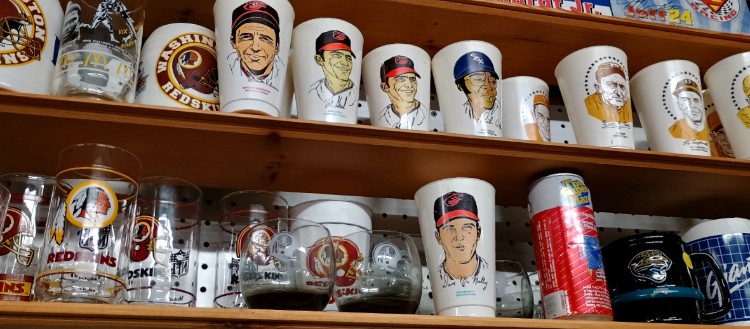
There’s a wonderful selection of sports memorabilia for the sports lover on your list. Come browse and find a treasure!
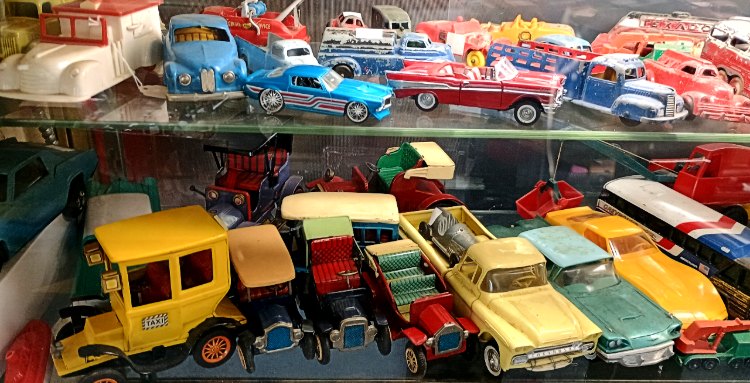
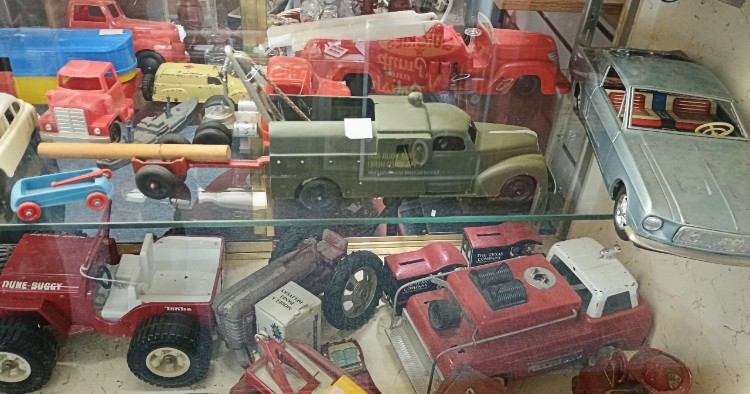
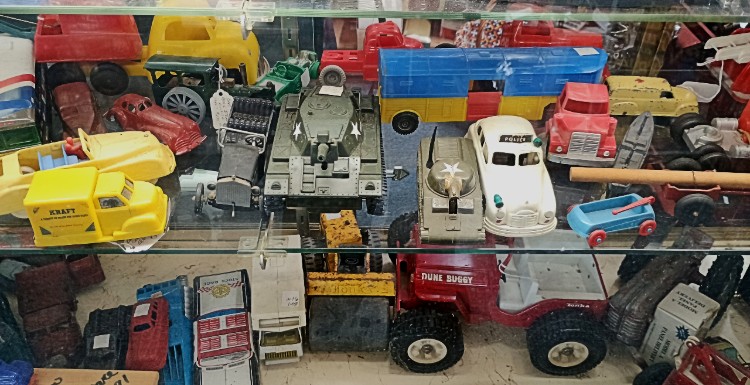
Wonderful Metal and Plastic Vehicles
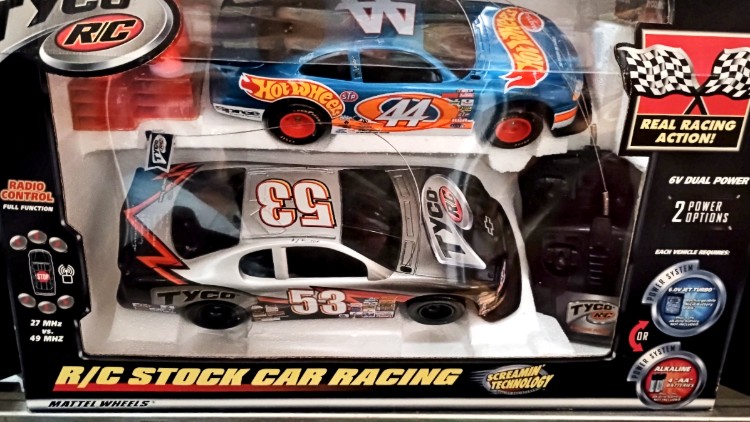
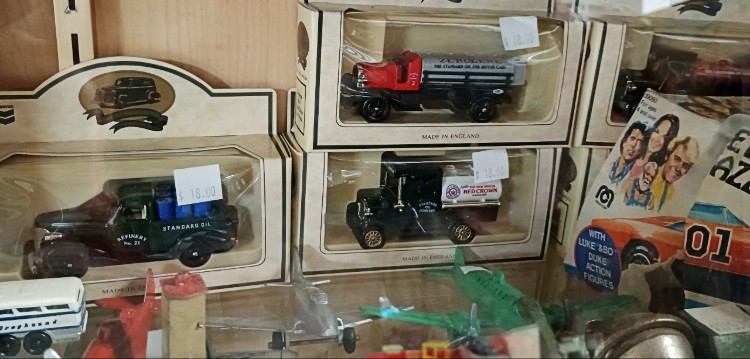
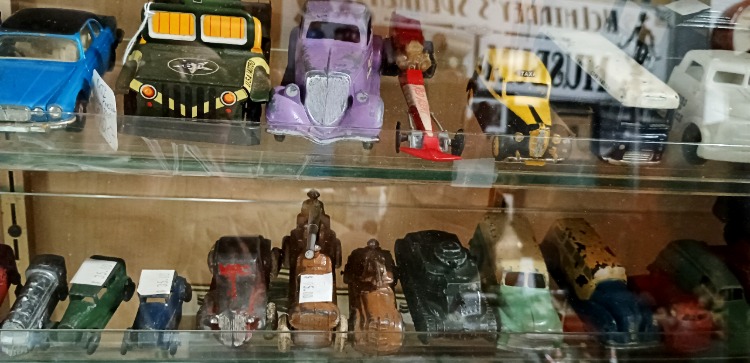
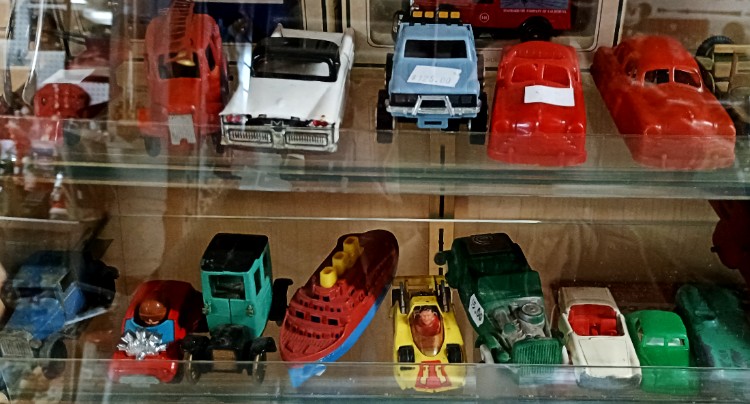
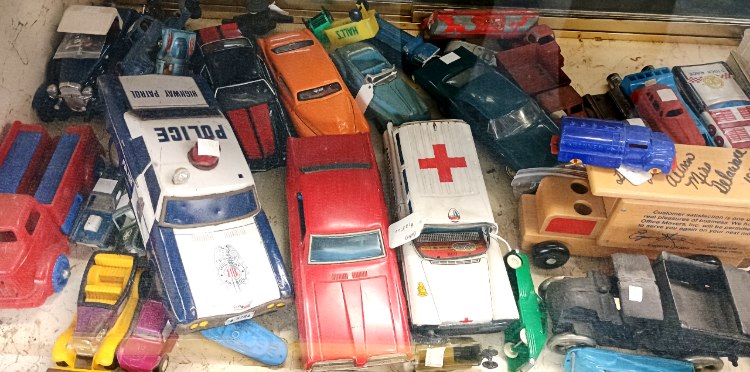
Have you been in lately to check the huge variety of metal and plastic cars, trucks, and more in our ‘collection of collections?’ Check out this photo gallery:
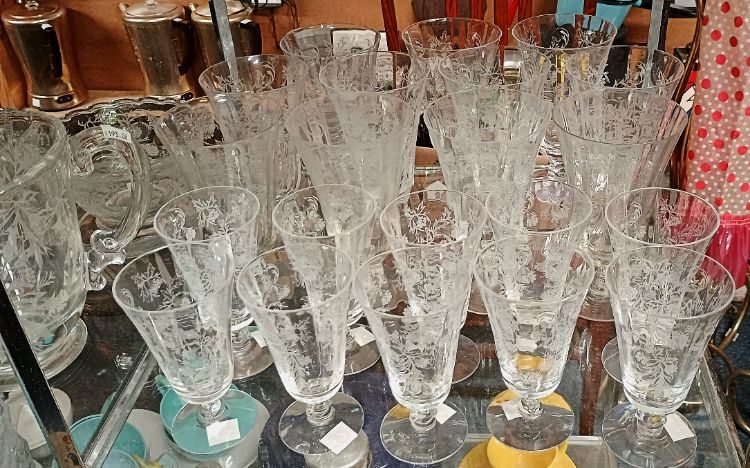
Beautiful Glassware to Functional Cast Iron
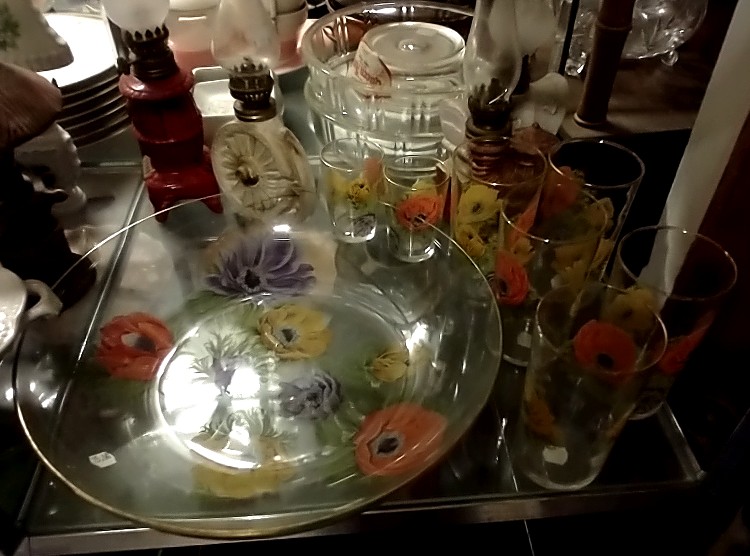
This glassware is perfect for the holidays – whether on your table or as a gift. Or maybe you know someone who would love a beautiful and functional cast iron skillet!
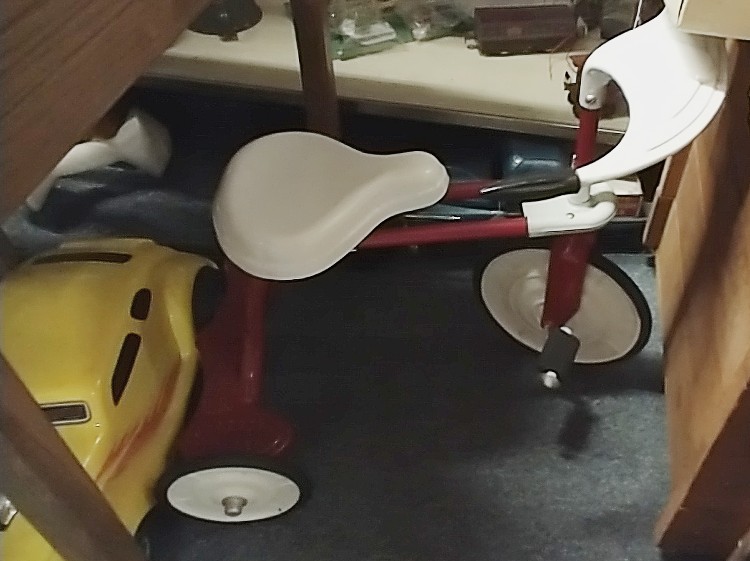
Let’s Not Forget the Kids – after all, it’s about SANTA!
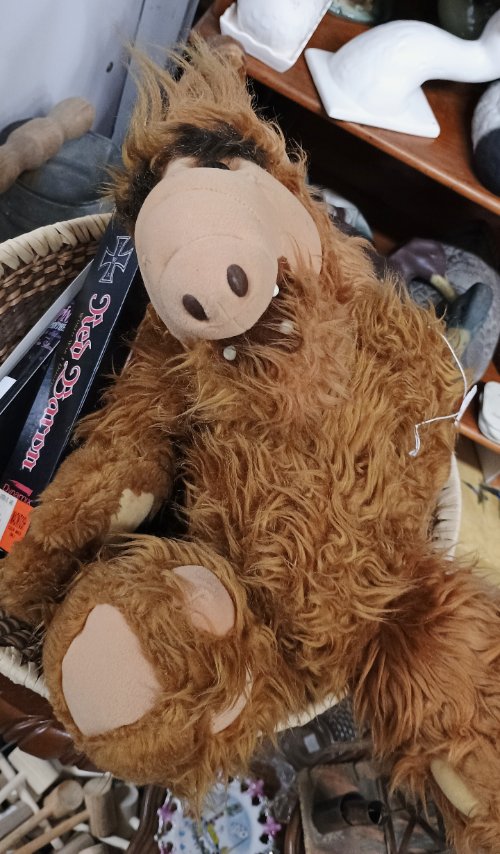
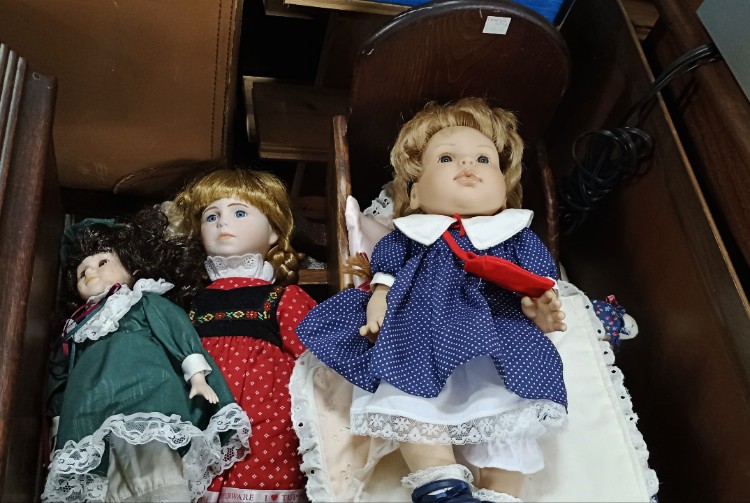
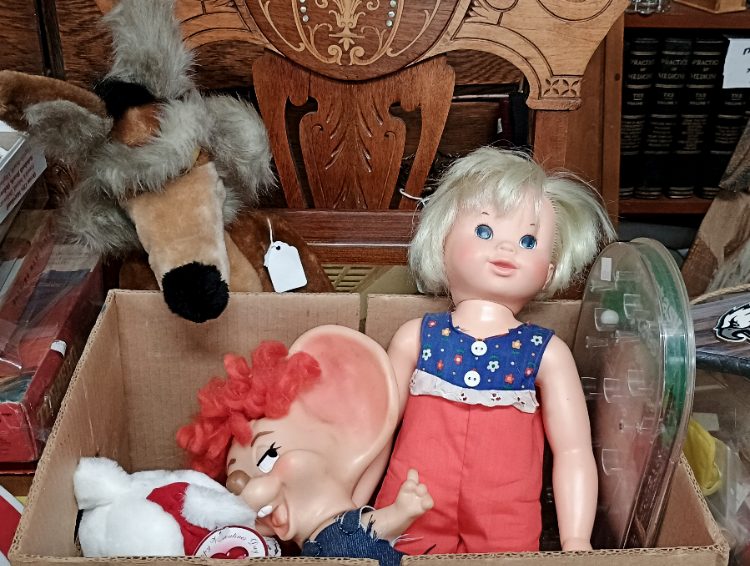
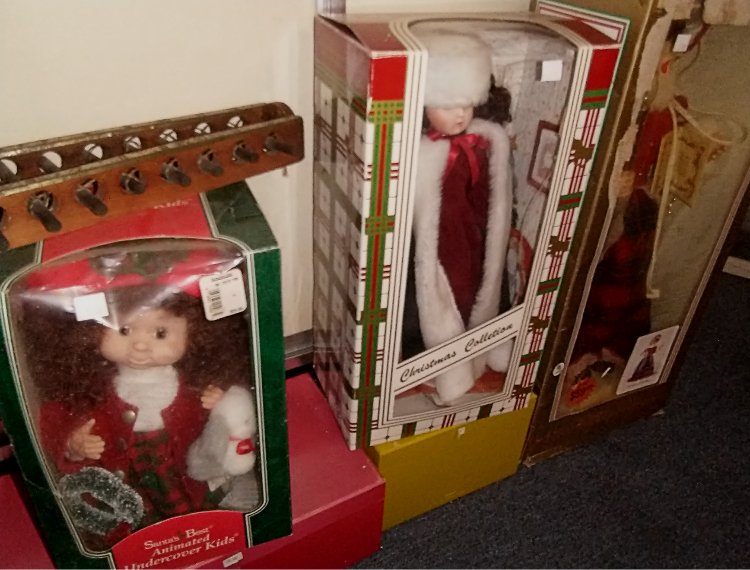
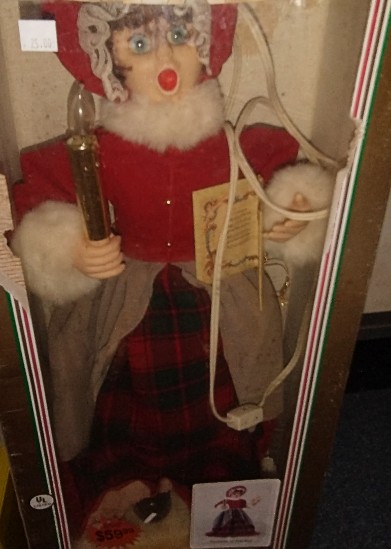
From hundreds of dolls and accessories to stuffed toys, and more…
Our 20% OFF STOREWIDE SALE thru Christmas Eve may be just the boost you need to purchase that last-minute gift you’ve been considering. And we’re here and we’re watchin’ for ya. We’ll help you find what you’re looking for!
Sharing some of the ‘finds’ received from a private home this week offers a perfect example of the variety of gift ideas available for your Holiday! From cast iron to beer signs, pottery jugs to glass pigs, musical instruments to Tonka Toys, and more, you must take some time to stop and browse our shop. Unique or useful, we have so many choices at BAHOUKAS!
The following items are perfect home decor ideas as well as for gift-giving. CLICK on the IMAGE to view larger size.
Below are a variety of unique items: uranium glass marbles, musical instruments, Tonka Trucks, glass canning jars with glass tops, and much more – all waiting for you here at BAHOUKAS ANTIQUE MALL and BEER MUZEUM.
Hopefully this one sampling from items acquired this week will motivate you to walk in our shop and find the ‘treasure’ you’re looking for. Remember, we’re here … and we’re watchin’ for ya!
Do you have a train enthusiast/collector on your gift list? Or maybe you just need to add to your holiday train display! We’ve acquired several Lionel ‘O’ scale train pieces that just might be what you’re looking for!
There are even several vintage cast iron train cars.
Then add the American Flyer ZEPHYR and unique pieces of WALTHERS PRESENTS The GREAT CIRCUS TRAIN. Great pieces to add to an existing collection or to start a collection for a youngster in your life.
Accessories are also available including track, signs and buildings, and vintage Plasticville® pieces. Many of these would make great stocking stuffers.
As the big day approaches, you might want to stop by BAHOUKAS ANTIQUE MALL and browse our model trains and accessories. That perfect ‘gift’ or item for your own collection and train display might be ‘hiding in plain sight’ waiting for you to find the treasure.
Of course, we’re here and we’re watchin’ for ya. Hurry in and make your holiday gift-giving super special!
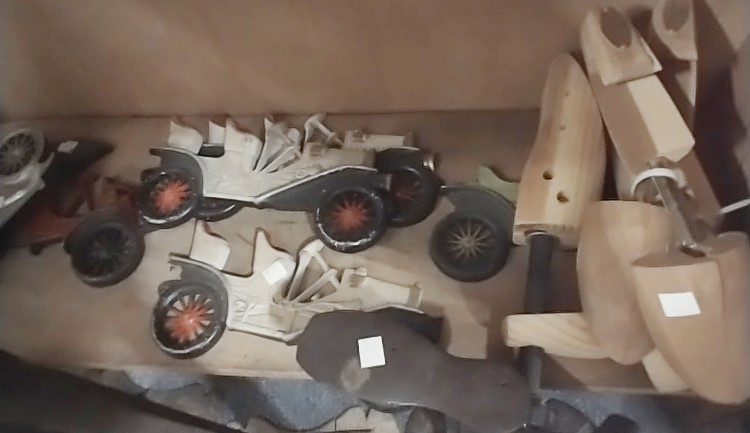
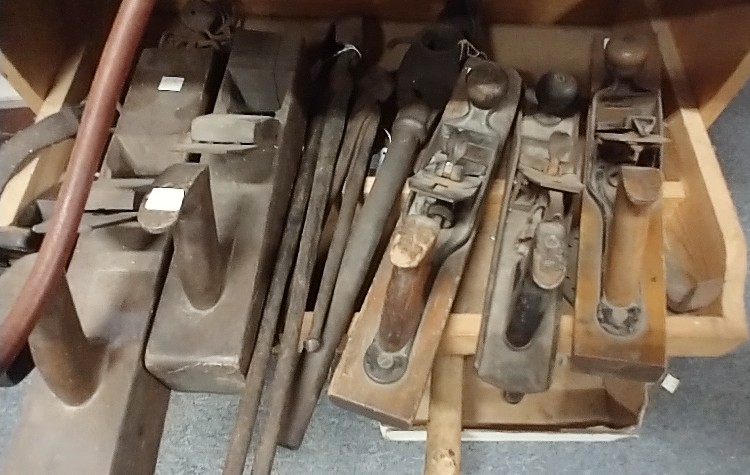
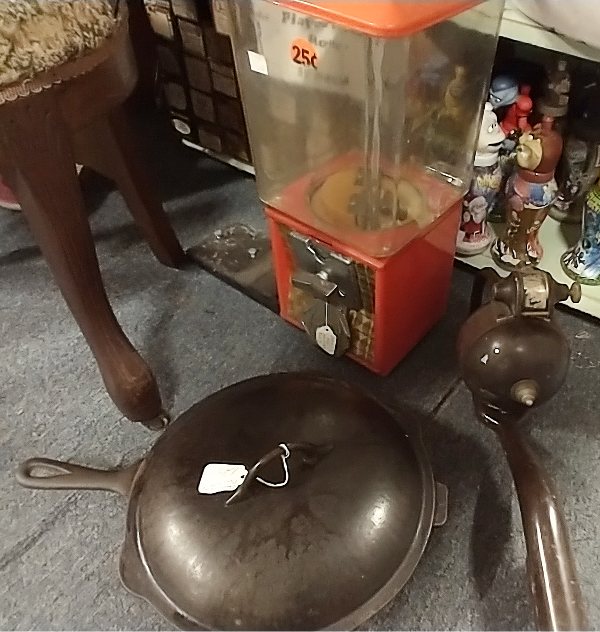
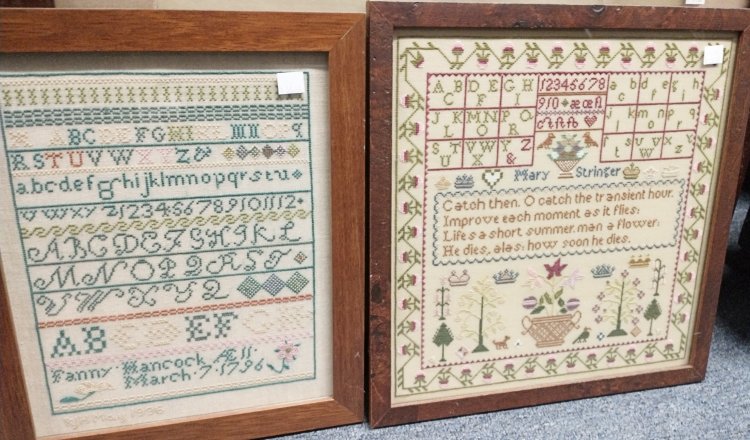
Last week we shared a gallery of photos to encourage you to look UP when browsing the shop. With items on high shelves and even hanging from the ceiling, you’ll definitely want to look UP.
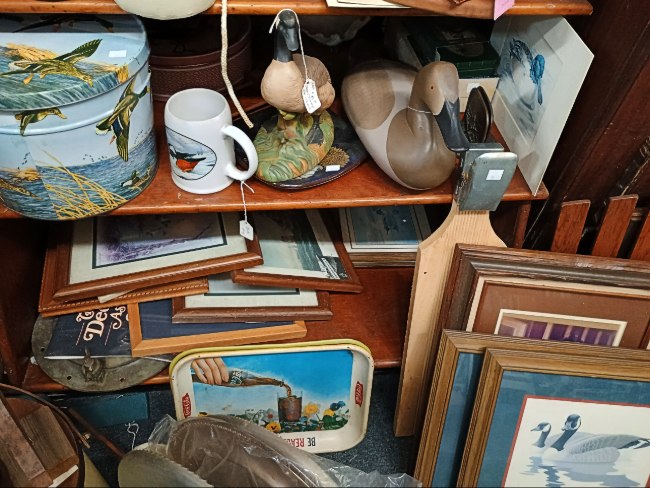
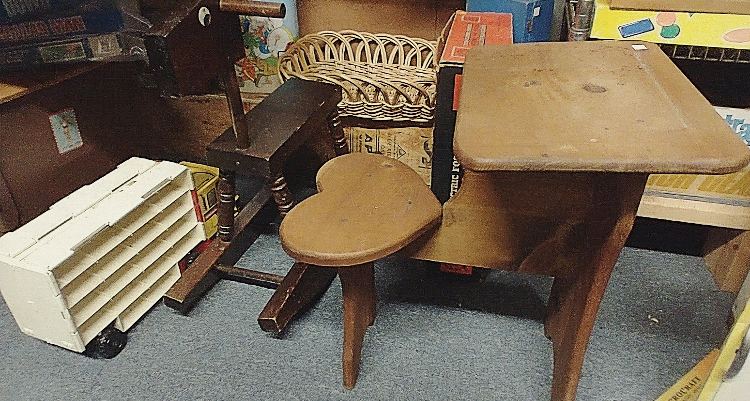
But this week we share that LOOKING down is equally valuable while browsing Bahoukas Antique Mall. This gallery is a glimpse of just why you might want to notice lower shelves for more surprises!
This is just a quick peek at the variety of items waiting to be discovered when you remember to LOOK down!!!
With the various holidays coming up, we’re a really fun shop to browse for unique gifts and decorating ideas. We’re here and you can be sure, we’re watchin’ for ya! Stop by and browse.